Mind and body are one system
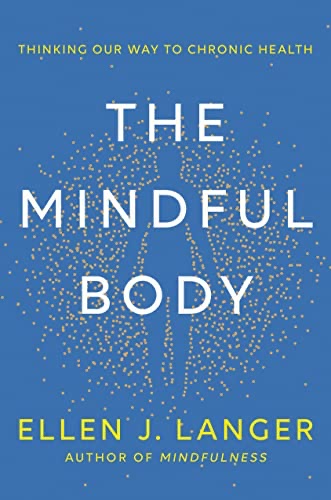
Langer argues the split between mental and physical is a false abstraction; where you put the mind, the body follows. Her experiments show beliefs and framing producing measurable physiological change.
6 ideas
Langer argues the split between mental and physical is a false abstraction; where you put the mind, the body follows. Her experiments show beliefs and framing producing measurable physiological change.
Langer's famous experiment placed elderly men in an environment staged as 1959, and their vision, strength, and appearance measurably improved. It is her flagship evidence that expectation reshapes biological aging.
For Langer, mindfulness is not meditation but the practice of noticing new distinctions and holding categories loosely. This alertness to variability is what loosens the fixed beliefs that constrain health.
By tracking when a chronic symptom is better or worse, patients discover it is not constant and regain a sense of control. Langer offers this variability-hunting as a concrete technique to weaken illness identity.
Diagnoses and expert framings become self-fulfilling by dictating how we interpret bodily signals. Langer urges treating such labels as provisional to escape their physiological grip.
Langer reframes much of chronic health as shaped by mindset, context, and framing rather than fixed pathology. The book positions perception as a legitimate, evidence-backed medical lever.