Smith's first geological map
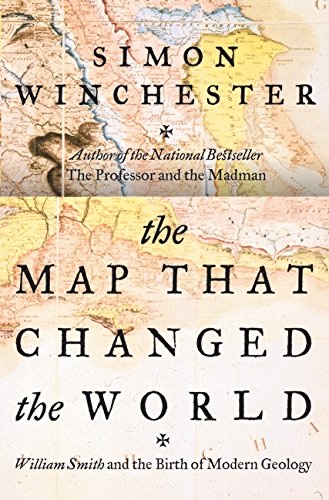
Winchester tells how a self-taught canal surveyor produced the 1815 geological map of England's strata. The achievement founded modern stratigraphy from outside the scientific establishment.
6 ideas
Winchester tells how a self-taught canal surveyor produced the 1815 geological map of England's strata. The achievement founded modern stratigraphy from outside the scientific establishment.
The narrative dwells on how Smith, an outsider by social class, was plagiarized, bankrupted, and even jailed before recognition. Scientific credit is shown to track status as much as merit.
Each layer of sedimentary rock contains its own distinctive set of fossils. This lets the same stratum be recognised in widely separated places even when the rock itself looks different. Order in the rock record can be read from the fossils it contains, which turns a local observation into a method for correlating strata across a whole region.
Once rocks are read as an ordered sequence laid down over time, the landscape stops being a static creation and becomes a record of a long past. This way of seeing strained the literal biblical chronology and made deep time easier to accept. It helped lay the ground for evolutionary thinking by showing that life forms changed layer by layer.
Smith found his principle while cutting the Somerset Coal Canal and draining land. That work exposed long sections of strata and gave him a commercial reason to predict where coal lay. Repeated contact with physical evidence, driven by economic stakes, revealed patterns that the theorising gentlemen savants of the time had missed.
William Smith, a blacksmith's son from Oxfordshire, spent over twenty years surveying canals and mines. In 1815 he published a hand-coloured geological map of England, Wales and part of Scotland, about 8.5 by 6 feet. The Geological Society, dominated by gentlemen, snubbed him, and George Bellas Greenough issued a cheaper rival map drawing heavily on Smith's work. Smith went bankrupt and spent time in debtors' prison in 1819, then worked as an itinerant surveyor until 1831, when the Society gave him its first Wollaston Medal and Adam Sedgwick named him 'the Father of English Geology.'