There is no recipe for hard things
The genuinely hard problems of leadership, such as layoffs, demotions, and near-death pivots, have no formula. You manage through them with nerve and judgment, not a playbook.
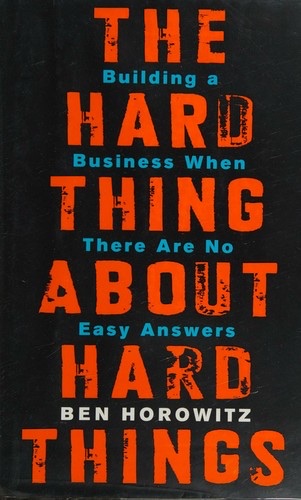
7 ideas
The genuinely hard problems of leadership, such as layoffs, demotions, and near-death pivots, have no formula. You manage through them with nerve and judgment, not a playbook.
Horowitz names the emotional low of near-failure 'The Struggle' and insists founders keep leading through it. His counsel: don't take it personally, don't quit, and focus on the next move.
Prioritize making the company a good place to work first; well-cared-for people build good products, which yield profit. Reverse the order and the organization decays.
A peacetime CEO leads when the company has a clear market advantage and is expanding. That setting rewards broad consensus, empowerment, creativity and tolerance of many initiatives. A wartime CEO leads when the company faces an existential threat, and must centralize decisions, enforce narrow protocol, violate norms and focus everything on the single mission. The key skill is diagnosing which mode the company is actually in, because peacetime behavior during a war gets the company killed and wartime behavior during peace drives off talent.
In a layoff, each manager should personally tell the people on their own team, rather than handing it to HR or a less senior executive. The people who stay judge the company by how their departing colleagues are treated. A manager who delegates the conversation destroys the trust the survivors need to keep working. The CEO should also move fast once the decision is made, because leaks and delay turn a painful cut into a betrayal.
When a company falls behind a competitor on product, no clever marketing move, partnership or repositioning will save it. The only fix is the grinding work of building a better product. Reaching for a silver bullet is a way to avoid the hard problem. It lets the company keep losing while feeling strategic.
Loudcloud went public in March 2001 into a collapsed dot-com market, raised about $160 million, and then watched its customers go bankrupt and its stock fall below $1. He kept the internal automation software as Opsware and signed EDS as its anchor licensing customer. Opsware later rebuilt itself as a software company and was sold to HP in 2007 for about $1.6 billion.