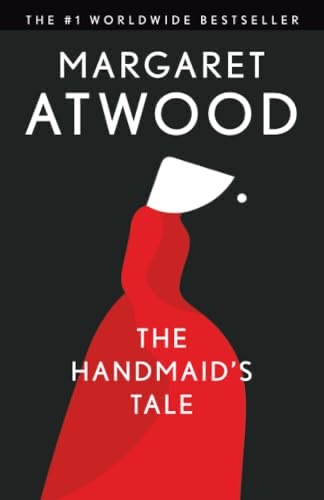
Cover of The Handmaid's Tale

The Handmaid's Tale

Margaret Atwood

8 ideas

  1. Regimes Control Society by Controlling Reproduction

    When fertility collapses, a state can justify seizing total control over women's bodies by reframing reproduction as a national resource rather than a personal choice. Assigning fertile women as state-owned breeders converts a biological crisis into a permanent mechanism of subjugation cloaked in necessity.

  2. Stripping Identity Through Naming and Uniform

    Erasing a person's name and replacing it with a possessive label tied to their owner (Of-Fred) dissolves individual identity into function. Mandatory color-coded uniforms make each woman's role and status legible at a glance, eliminating private selfhood and enforcing constant categorization.

  3. Oppression Recruits the Oppressed as Enforcers

    Tyranny becomes sustainable when it delegates surveillance and punishment to members of the subjugated class itself, like the Aunts who indoctrinate and discipline the Handmaids. By making victims complicit in policing one another, the regime fractures solidarity and outsources its cruelty.

  4. Offred's Captivity in the Commander's Household

    In the Republic of Gilead, set in what was once Cambridge, Massachusetts, a woman renamed Offred is assigned as a Handmaid to the household of a Commander, Fred, and his wife Serena Joy, and is made to take part in a monthly 'Ceremony' meant to impregnate her. The Commander secretly summons her for illicit Scrabble games and takes her to Jezebel's, a hidden brothel. Meanwhile Serena Joy arranges for her to sleep with the chauffeur Nick to conceive, and Offred's story ends when a van of 'Eyes' takes her away, leaving her fate uncertain. Her account survives only as cassette tapes that scholars examine at a symposium in 2195.

  5. Offred loses her account overnight

    Before Gilead, the narrator was a married woman with a daughter and a job at a library. After a staged attack killed the President and Congress, the new regime suspended the Constitution and froze every account held by a woman, transferring control to her nearest male relative, and employers fired all female staff on the same day.

  6. History detaches itself from suffering

    The closing 'Historical Notes' present Offred's account as a transcript being studied at an academic conference in 2195. The male scholars joke about it and argue about sources, and they decline to pass moral judgment on Gilead. The frame shows how later analysis can turn a person's testimony into data, quietly repeating the erasure the regime carried out.

  7. Ordinary is whatever you're used to

    Aunt Lydia tells the Handmaids that what seems strange now will become ordinary with time. Oppression becomes stable when people adjust to each small new restriction instead of measuring it against how things used to be. Offred admits that before the coup she lived by 'ignoring', treating distant violence in the news as someone else's story until the system reached her.

  8. Freedom to versus freedom from

    Gilead justifies itself by trading one kind of liberty for another. It offers women 'freedom from' harassment, pornography and sexual danger, and it takes away their 'freedom to' work, read, own property and choose partners. The trade shows how protection can be used as the moral cover for total control over a group.

Save and mark ideas in the app