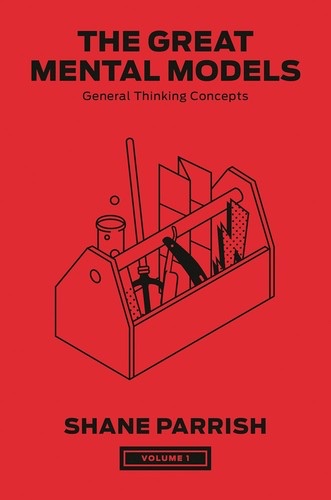
Cover of The Great Mental Models

The Great Mental Models

Shane Parrish, Rhiannon Beaubien

3 ideas

  1. The Map Is Not the Territory

    Every model, abstraction, or representation we use is a compression of reality that necessarily omits details, and mistaking the map for the actual terrain leads to error. Maps are useful precisely because they reduce complexity, but they become dangerous when we forget they are simplifications and stop updating them as the territory changes.

  2. Reasoning From First Principles

    Instead of reasoning by analogy or accepting inherited assumptions, break a problem down to its fundamental, irreducible truths and rebuild your conclusions from there. This separates what is actually true and unchangeable from what is merely convention, opening room for solutions that copying existing approaches would never reveal.

  3. Second-Order Thinking Reveals Hidden Consequences

    Most people stop at the immediate result of a decision, but every action triggers a cascade of subsequent effects that often reverse or undermine the first-order benefit. Asking 'and then what?' repeatedly exposes downstream consequences, making seemingly obvious choices reveal their true long-term cost or value.

Save and mark ideas in the app