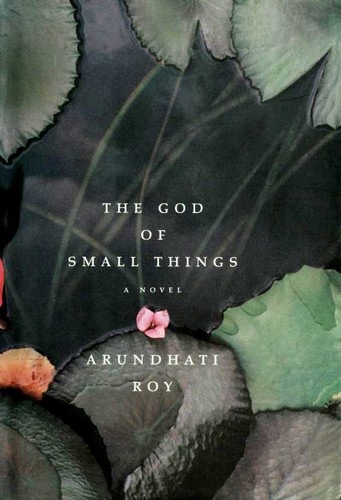
Cover of The God of Small Things

The God of Small Things

Arundhati Roy

6 ideas

  1. The Love Laws Govern Permitted Desire

    Societies encode unspoken 'Love Laws' that dictate who can be loved, how, and how much — drawn along lines of caste, kinship, and gender. The deepest violence occurs not when these laws are broken but in the disproportionate punishment that follows, revealing the laws were never about love but about preserving hierarchy.

  2. Trauma Read Backward From Its Aftermath

    Narrating an event by first showing its consequences and only later its cause reframes how meaning is assigned — the reader knows the loss before the act that produced it. This structure shows that the significance of a moment is constructed retroactively by what survives it, not by the moment itself.

  3. The God of Small Things as Survival Lens

    When the large-scale world offers no safety, attention contracts to manageable, immediate particulars — a fixed smile, an insect, a fingernail — as a way to endure the unbearable. This 'god of small things' is the psychic mechanism by which the powerless make life livable by lowering the scale of what they attend to and control.

  4. Velutha's death after Ammu's affair

    In Ayemenem in 1969, Ammu, a divorced Syrian Christian mother, has a secret affair with Velutha, a Paravan (Dalit) carpenter. When Sophie Mol, the twins' visiting English cousin, drowns, Baby Kochamma falsely accuses Velutha of abduction and rape to cover the family's shame. Police beat him to death, and she coerces seven-year-old Estha into confirming the lie, which leaves him mute and the family broken for decades.

  5. Progressive ideology coexists with caste enforcement

    Comrade Pillai, the local Marxist, and Chacko, an Oxford-educated self-styled Marxist, both profess equality. Both still abandon Velutha when defending him would cost them status or political advantage. Ideological commitment gives way to caste loyalty whenever the two collide. The people who claim to oppose a hierarchy can end up as its agents of enforcement.

  6. Big Things versus Small Things

    History, caste, politics and nation are the Big Things, and they work their damage through Small Things: a child's lie, a pickle factory, a boat, a single afternoon. Watch the small, private acts where large structures actually touch bodies, because that is where catastrophe becomes visible. Tragedy is never one decision. It is the build-up of ordinary moments that 'changed in a day.'

Save and mark ideas in the app