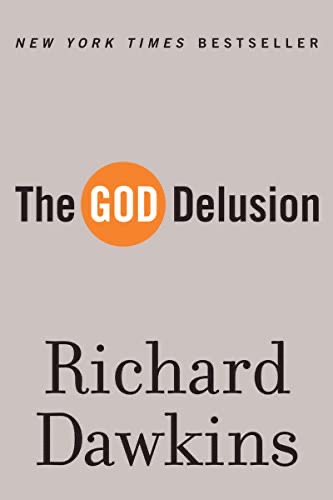
Cover of The God Delusion

The God Delusion

Richard Dawkins

6 ideas

  1. The Spectrum of Theistic Probability

    Belief in God is not binary but sits on a seven-point scale from 'strong theist' (100% certain God exists) to 'strong atheist' (100% certain God does not). Most honest atheists occupy position six — 'de facto atheist' — holding that God's existence is extremely improbable rather than disproven, since absolute certainty is unwarranted in either direction.

  2. The Designer Demands Its Own Explanation

    Invoking a complex creator to explain the complexity of the universe explains nothing, because the designer must be at least as complex as what it designs and therefore even more in need of explanation. This makes God a worse explanatory endpoint than the slow accumulation of simple steps offered by natural selection.

  3. Religion as Evolutionary Byproduct

    Religion need not be directly adaptive; it can be a misfire of psychological mechanisms that were adaptive for other reasons, such as a child's evolved tendency to trust authority figures without question. The same obedience that protects children from danger also makes them absorb unverified beliefs, which then propagate culturally.

  4. Morality Precedes and Outlasts Religion

    Moral judgments are widely shared across believers and atheists alike and shift over time independent of scripture, demonstrating a secular 'moral Zeitgeist' rather than divine command. People do not actually derive ethics from holy texts but selectively cherry-pick from them using a prior moral sense that comes from elsewhere.

  5. Mass Delusion Versus Individual Insanity

    A persistent false belief held by one person against contradictory evidence is labeled insanity, but the identical belief held by millions is granted the protected status of religion. Reframing shared faith as a collective version of what we'd otherwise diagnose strips away the social immunity that normally shields it from scrutiny.

  6. The God of the Gaps Shrinks

    When God is invoked to fill whatever science cannot yet explain, the deity's territory contracts with every scientific advance. Treating ignorance as evidence of the divine is self-defeating, because each closed gap retroactively removes a reason that had been offered for belief.

Save and mark ideas in the app