Flavor is perception, not just chemistry
How a dish tastes depends on memory, emotion, and expectation as much as its molecules. The book grounds cooking in the science of perception, so context and presentation change flavor itself.
5 ideas
How a dish tastes depends on memory, emotion, and expectation as much as its molecules. The book grounds cooking in the science of perception, so context and presentation change flavor itself.
Sharma catalogs practical levers, brightness from acid, richness from fat, depth from browning and umami, to adjust a dish. Understanding which lever fixes a flat or heavy result makes cooking diagnostic rather than guesswork.
Acids do more than add sourness: they sharpen and lift other flavors so a dish reads as 'brighter.' They also act chemically, slowing browning in cut produce, firming pectin so vegetables and legumes stay intact, and denaturing proteins in marinades. Adding acid at the end of cooking preserves its perceptual punch, while adding it early changes texture.
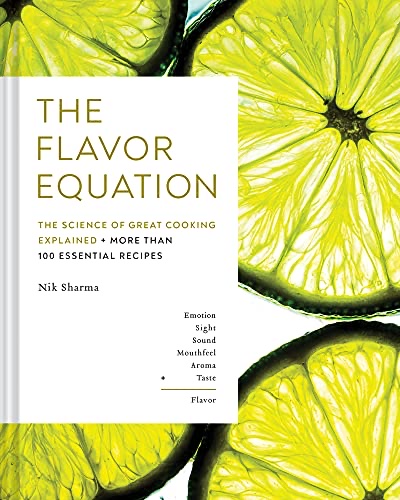
Flavor is not taste alone but the sum of emotion, appearance, sound, mouthfeel, aroma, and taste, each of which a cook can deliberately adjust. Treating flavor as an equation turns cooking from recipe-following into variable-tuning: when a dish feels flat, you identify which term is missing or weak rather than just adding more salt.
Explaining Indian ingredients like amchur, kokum, asafoetida, or tempered spices through their molecular behavior makes them legible to cooks outside that tradition without flattening their origin. The mechanism becomes a shared language: once you know that tempering spices in hot fat pulls fat-soluble aroma compounds out of them, the technique becomes something anyone can reuse. The immigrant's pantry is presented as rational, not exotic.