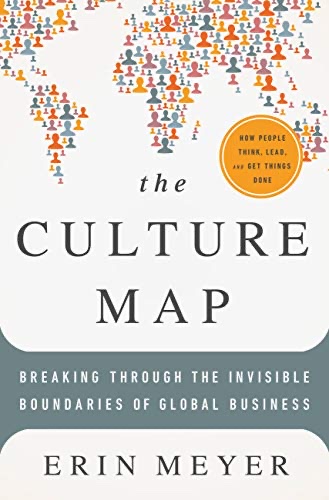
Cover of The culture map

The culture map

Erin Meyer

6 ideas

  1. Eight scales of cultural difference

    Meyer maps national work cultures on eight behavioral scales: communicating, evaluating, persuading, leading, deciding, trusting, disagreeing, and scheduling. Each scale is a spectrum on which a culture sits relative to others.

  2. Low-context vs high-context communicating

    Low-context cultures (US, Germany) prize explicit, literal messages; high-context cultures (Japan, France) rely on implication and shared reading between the lines. Miscommunication comes from assuming your own default is universal.

  3. Position is relative, not absolute

    A culture only reads as 'direct' or 'hierarchical' relative to the observer's own position on the scale. The map matters more than a fixed label because differences are experienced from where you stand.

  4. Task-based vs relationship-based trust

    Some cultures build trust cognitively through reliable work; others build it affectively through personal relationship and shared meals. Global collaboration fails when one side skips the trust-building the other requires.

  5. Disagreeing and confrontation norms diverge

    Open debate signals engagement in some cultures and disrespect in others, independent of how emotionally expressive people are. Managers must decouple 'confrontational' from 'emotional' to read a room correctly.

  6. Adapt leadership to hierarchy expectations

    On the leading scale, egalitarian cultures expect flat access and challenge, while hierarchical ones expect the boss to lead visibly from the front. Effective global leaders flex their style to local expectations rather than exporting one default.

Save and mark ideas in the app