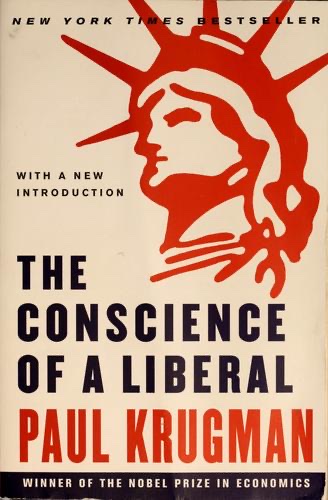
Cover of The Conscience of a Liberal

The Conscience of a Liberal

Paul Krugman

6 ideas

  1. Politics Drives Inequality, Not Markets

    Shifts in income distribution are primarily caused by changes in political institutions, norms, and policy — minimum wages, unionization, tax structure — rather than impersonal forces like technology or globalization. The timing of inequality's rise and fall tracks political eras more closely than it tracks economic fundamentals.

  2. The Great Compression

    A dramatic narrowing of income and wealth gaps occurred rapidly in the 1930s-40s, created largely by wartime wage controls, strong unions, and high progressive taxation rather than gradual market evolution. Once established, this compressed distribution persisted for decades through reinforcing social norms, proving that equality can be deliberately engineered and sustained.

  3. Norms as Sticky Economic Forces

    Social norms about acceptable pay ratios and executive compensation act as durable constraints on inequality that outlast the policies that created them. When those norms erode, gaps widen even without changes in underlying productivity, because what counts as 'reasonable' compensation is socially negotiated rather than market-determined.

  4. Movement Conservatism as Organized Network

    Read the rightward political shift not as a spontaneous popular awakening but as the product of a deliberately built infrastructure — think tanks, donor networks, and media that fund and coordinate ideology. Viewing politics through this organizational lens reveals coordinated strategy where commentators see organic voter sentiment.

  5. Race as the Lever for Inequality

    The exploitation of racial resentment allowed economically self-interested coalitions to win working-class votes for policies that harmed those same voters' material interests. Racial division functions as the mechanism that prevents the formation of a broad lower-income coalition that would otherwise demand redistribution.

  6. Universal Programs Build Their Own Constituency

    Broad-based social programs like Social Security and Medicare become politically durable because they create large, cross-class groups of beneficiaries who defend them, unlike means-tested programs that can be portrayed as handouts to others. Designing policy for universality is therefore a strategy for permanence, not just equity.

Save and mark ideas in the app