An unreliable, grieving narrator
Holden's contempt masks unprocessed grief over his brother Allie's death and a breakdown he is narrating from a rest facility. His voice must be read as wounded and distorting, not authoritative.
5 ideas
Holden's contempt masks unprocessed grief over his brother Allie's death and a breakdown he is narrating from a rest facility. His voice must be read as wounded and distorting, not authoritative.
Sixteen-year-old Holden Caulfield is expelled from Pencey Prep and, rather than go home, spends about three days before Christmas wandering Manhattan: a hotel, bars, a failed encounter with a prostitute named Sunny and her pimp Maurice, a date with Sally Hayes, and a night at a former teacher's apartment that he flees when Mr. Antolini pats his head as he sleeps. The frame tells us he is narrating from a rest home or sanatorium, so the whole drift reads as the lead-up to a breakdown.
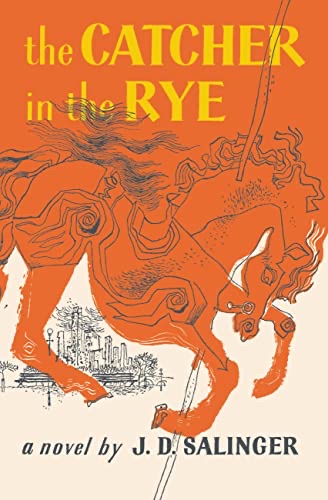
Holden misremembers Burns's line 'if a body meet a body' as 'catch a body' and imagines his only wanted job: standing at the edge of a cliff by a rye field, catching children before they run over it. The fantasy puts the fall into adulthood as a cliff that someone could stop. Its unworkability becomes the point when Holden watches Phoebe reach for the gold ring on the carousel and decides that if kids want to grab for it, you have to let them, even if they fall.
Holden's brother Allie died of leukemia, and Holden broke every garage window with his fist the night of the death. He still keeps Allie's baseball mitt, which is inked with poems. The novel suggests Holden's hostility toward the adult world and his wish to freeze things in place, like the unchanging exhibits of the Museum of Natural History, are what his mourning turns into when no adult helps him grieve. His alienation is less a philosophy than a symptom that tracks the loss.
Holden sorts people by one test: is this person performing a self for an audience or being what they are? Headmasters, actors, and Ivy League charm all fail this test. The narration also shows the lens turning back on its user, since Holden lies constantly, invents names, and performs toughness. That suggests the contempt for phonies is partly a defense against his own fear of becoming one.