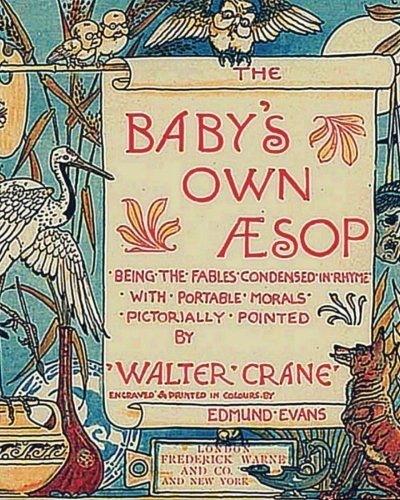
Cover of The Baby's Own Aesop

The Baby's Own Aesop

Walter Crane

4 ideas

  1. The Fox and the Sour Grapes

    A fox who cannot reach the grapes he wants declares them sour and not worth having. The mechanism: when a desired outcome proves unattainable, people retroactively devalue it to protect their self-regard rather than admit failure.

  2. Verse Moral as Compression Device

    Each fable is paired with a short rhyming couplet that distills the narrative into a memorable rule. The mechanism: abstract behavioral lessons become transmissible and durable when compressed into rhythmic, rhyming language that aids recall over reasoning.

  3. Animals as Moral Mirrors

    Human vices and virtues are projected onto animals with fixed temperaments — the proud peacock, the cunning fox, the industrious ant. The mechanism: assigning a moral flaw to a non-human actor lets the audience judge the behavior dispassionately before recognizing it in themselves.

  4. Consequences Follow Character Predictably

    The fables assert that outcomes are not random but flow directly from a character's disposition — the boastful are humbled, the greedy lose all, the patient prevail. The implied claim is that the moral universe is just and that observable behavior reliably forecasts fate.

Save and mark ideas in the app