Anticipation exceeds arrival
De Botton argues the imagined trip is often richer than the real one, because reality includes our anxious, distracted, embodied selves. We can never fully leave ourselves behind at the destination.
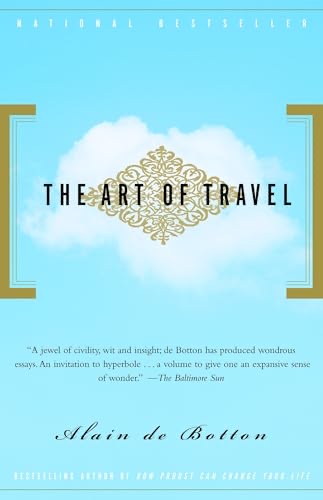
6 ideas
De Botton argues the imagined trip is often richer than the real one, because reality includes our anxious, distracted, embodied selves. We can never fully leave ourselves behind at the destination.
He enlists writers and artists, Wordsworth, Ruskin, Van Gogh, as guides who teach attention to overlooked details. The value of travel is learning how to look, not merely where you go.
What we find exotic abroad often names a quality missing at home, so foreign places mirror our unmet needs. Attraction to a place is really self-knowledge in disguise.
In deserts and mountains, de Botton locates the sublime, a pleasurable sense of our own insignificance before vastness. Grand landscapes console by right-sizing human troubles.
Citing Xavier de Maistre, he argues we can travel by applying a traveler's fresh attention to familiar surroundings. Curiosity, not distance, is what makes an experience a journey.
De Botton opens with the Duc des Esseintes, the reclusive aesthete of J.-K. Huysmans's novel À rebours, who resolves to leave his villa outside Paris for London after reading Dickens. While waiting for the boat train in Paris, he spends an evening in an English tavern and a wine bar near the Gare Saint-Lazare, surrounded by English travelers, food and fog-like gloom. He then decides the real journey could only disappoint what he has already savored, lets the train go, and returns home for good.