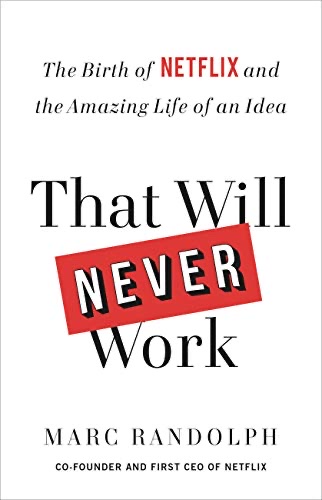
Cover of That Will Never Work

That Will Never Work

Marc Randolph

7 ideas

  1. No Idea Survives Contact With Reality

    Every business idea is a hypothesis that feels brilliant in your head but is almost certainly wrong in some critical way until tested against real customers. The job of a founder is not to defend the original idea but to run cheap, fast experiments that reveal which parts are wrong before too much money is spent.

  2. Mailing A CD To Test Shipping

    Before building anything, the founders mailed a CD to themselves in a plain envelope to test whether discs could survive postal shipping cheaply and intact — and it arrived undamaged the next day. This single $0.32 test was what made the entire mail-order DVD model plausible and replaced months of speculation with one concrete answer.

  3. Canada Principle For Focus

    Resist the temptation to chase an adjacent, seemingly easy opportunity (like expanding to Canada) because the small added revenue rarely justifies the disproportionate complexity and distraction it introduces. Concentrate resources on the core business until it is genuinely working rather than diluting effort across plausible-looking extensions.

  4. Subscription Replaces Per-Transaction Friction

    Switching from charging per individual rental to a flat monthly subscription with no due dates or late fees removes the psychological friction that made customers hesitate before each purchase. By converting many small painful decisions into one painless recurring commitment, you change customer behavior and unlock retention.

  5. Killing DVD sales to focus on rentals

    In its first year Netflix sold DVDs as well as renting them, and sales brought in most of its revenue. The founders dropped sales, ceded that market to Amazon, and put everything into rentals. After further tests, rentals became the Marquee subscription program, with no due dates and no late fees. The episode shows that focus can mean cutting the business line that is currently paying the bills in order to pursue the one that could be defensible.

  6. Nobody knows anything, so test instead

    Arguing over a plan produces opinions, and only cheap, fast experiments produce evidence. The founder's real skill is building a habit of running many small tests quickly and letting the data kill most ideas, including the founder's favorites.

  7. Founder accepts demotion from his co-founder

    Hastings proposed that he himself become CEO and that Randolph stay on as president. Randolph agreed and argued that separating ego from what the company needed at its next stage was itself a founder's responsibility, and that blunt candor between co-founders made the transition possible.

Save and mark ideas in the app