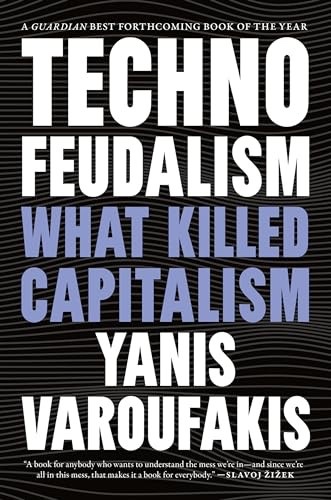
Cover of Technofeudalism

Technofeudalism

Yanis Varoufakis

6 ideas

  1. Capitalism Has Mutated Into Technofeudalism

    Capitalism's two pillars — markets and profit — have been displaced by digital platforms and rent extraction. Markets where buyers and sellers meet have been replaced by privately-owned fiefdoms, and profit has been subordinated to rent collected by those who own digital infrastructure.

  2. Cloud Serfs Who Produce Capital For Free

    Every time users post, review, search, or scroll, they generate the data and content that enriches platform owners without payment. Unlike wage laborers who are paid for work, these users perform unpaid labor that directly augments the owner's cloud capital.

  3. Amazon as a fief, not a market

    Treat a platform as privately owned territory rather than a marketplace. Its owner sets the rules, sees every transaction, and can demote or exile any seller at will. Seen this way, third-party merchants are vassal capitalists: they still make profits, but they must pay tribute to the lord to reach customers at all.

  4. Cloud capital as a means of behavioral modification

    Cloud capital is the network of servers, algorithms, and data that doesn't just produce goods but trains users, then shapes their desires, then sells them things directly. Unlike terrestrial capital such as factories and machines, it reproduces itself mostly through unpaid user activity. It holds a closed feedback loop of attention, data, and purchase inside one owner's system.

  5. Platform rent displaces profit as surplus

    Platforms like Amazon take a cut of up to 40% of each sale on their sites through fees charged to sellers for access. This income comes from owning the only gateway to buyers, not from producing more cheaply than competitors. It is rent, not profit. Because the owner controls who sees what and at what price, competitive pressure never drives the fee down the way it would erode profit in an open market.

  6. Post-2008 central bank money funded cloud capital

    After 2008, quantitative easing flooded financial markets with cheap money while austerity held down wages and demand. That left firms with little reason to invest in productive capacity. Much of the liquidity went instead into Big Tech valuations and cloud capital buildout, funding the rise of platform owners with public money.

Save and mark ideas in the app