From madrassa students to a regime
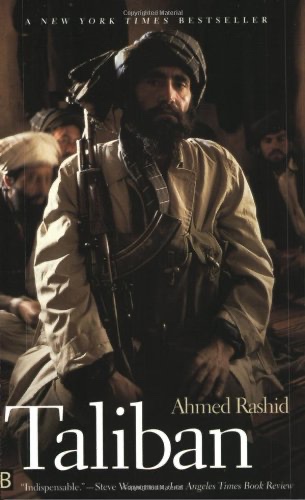
Rashid traces how the Taliban emerged from Pakistani religious schools and war-orphaned refugees to seize most of Afghanistan by 1996. Their rise grew out of the vacuum left by mujahideen civil war.
9 ideas
Rashid traces how the Taliban emerged from Pakistani religious schools and war-orphaned refugees to seize most of Afghanistan by 1996. Their rise grew out of the vacuum left by mujahideen civil war.
The Taliban imposed an austere reading of Islam shaped by village Deobandi tradition, banning music, education for women, and modern life. Rashid shows this ideology was as much cultural as theological.
Rashid argues the movement could not have prevailed without Pakistani intelligence support and Saudi money and doctrine. External sponsorship, not just internal zeal, explains their conquest.
Rashid warns, presciently before 2001, that abandoning Afghanistan to chaos incubates transnational militancy. Neglect of a collapsed state has global security costs.
Opium cultivation and smuggling financed the conflict and entrenched warlord power. The war economy made peace materially unprofitable for many actors.
Pakistan's intelligence services built up the Taliban to secure strategic depth and trade corridors, but the movement's cross-border madrassa networks, drug revenues and alliance with Osama bin Laden's Arab fighters gave it independent power. The client then radicalized its sponsor, exporting sectarian militancy back into Pakistan and harboring jihadists who threatened the region and the West.
In autumn 1994 a Pakistani trade convoy bound for Turkmenistan was held up by warlords near Kandahar, and a small band of madrassa students led by Mullah Omar freed it and then took Kandahar city with little resistance. Pakistan's interior ministry and transport mafia, eager for secure trade routes to Central Asia, backed the group with money, arms and recruits, turning a local vigilante band into a force that captured Kabul by September 1996.
The Taliban's rank and file were young men raised in Pakistani refugee camps and Deobandi madrassas, cut off from tribal structures, women, family life and Afghan history. Lacking these anchors, they adopted a stripped-down, literalist Islam whose rules could be enforced mechanically, which explains the movement's extreme bans on women's work, education and public life rather than any traditional Afghan practice.
After the Soviet collapse, the US, Russia, Iran, Pakistan, Saudi Arabia and oil companies such as Unocal and Bridas competed for routes to export Central Asian oil and gas. Because a Turkmenistan-Afghanistan-Pakistan pipeline required a single stable authority in Afghanistan, outside powers and firms tolerated or courted the Taliban as potential guarantors of order, subordinating human rights and security concerns to energy access.