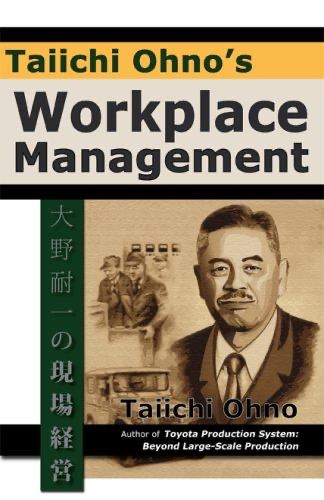
Cover of Taiichi Ohno's Workplace Management

Taiichi Ohno's Workplace Management

Taiichi Ohno

8 ideas

  1. The Five Whys Reaches Root Cause

    When a problem appears, ask 'why' five times in succession, each answer feeding the next question, to move past surface symptoms to the actual cause. Stopping at the first or second answer leads to treating effects rather than eliminating the source, so the repetition is what forces depth.

  2. Overproduction Is The Worst Waste

    Of all forms of waste, making more than is needed is the most dangerous because it hides every other inefficiency — excess inventory, transport, defects, and idle motion get absorbed and disguised by the surplus. Producing only what is needed exposes problems immediately, making them impossible to ignore.

  3. Stop The Line To Fix Problems

    Workers are given authority to halt production the moment a defect or abnormality appears, rather than passing it downstream. Stopping immediately seems costly but forces the underlying cause to be solved at its origin, preventing repeated defects and building quality into the process itself.

  4. Standards Exist To Be Broken

    A work standard is not a permanent rule but a baseline that captures the current best method, written so that deviations become visible and improvements can be measured against it. Where there is no standard there can be no improvement, because nothing defines what 'better' would mean.

  5. Pull Production Reverses The Flow

    Instead of upstream processes pushing parts forward on a schedule, each downstream process withdraws exactly what it needs from the one before it, signaling demand backward through the system. This kanban-driven pull prevents accumulation between stations and synchronizes the entire line to actual consumption rather than forecast.

  6. Go And See For Yourself

    Managers must observe the actual workplace and physical conditions directly rather than relying on reports, summaries, or data abstracted from the floor. Understanding only forms when you stand where the work happens, because the real situation is always more specific than any account of it.

  7. Standing in the circle to observe

    Ohno had managers stand in a chalk circle on the shop floor for hours until they could see the waste invisible to a passing glance. Real understanding of a process comes only from prolonged direct observation of where value is made.

  8. Reduce inventory to expose problems

    High inventory hides the true problems of a production line; lowering it deliberately makes bottlenecks and defects surface so they must be fixed. Efficiency comes from removing the water level, not raising it.

Save and mark ideas in the app