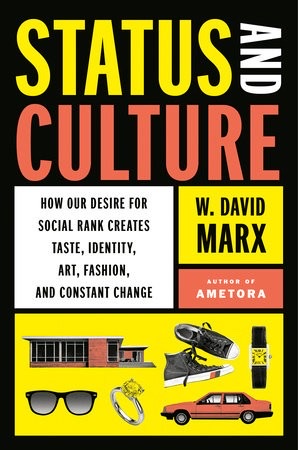
Cover of Status and Culture

Status and Culture

W. David Marx

6 ideas

  1. Status Seeking Drives Cultural Change

    Culture is not primarily a quest for beauty or truth but a byproduct of individuals seeking and defending social status. Aesthetic preferences, tastes, and conventions shift because people use them to claim or signal their position in status hierarchies.

  2. Three Sources of Social Status

    Status is earned through three distinct means: inherited position (class), achievement and dominance, or virtue and conformity to group norms. Different individuals draw on different mixes of these, which shapes which cultural signals they adopt.

  3. Signaling Costs Make Status Legible

    Status signals work only when they are costly enough that lower-status individuals cannot easily fake them — requiring money, time, rare knowledge, or risk. The expense of a signal is precisely what makes it a reliable marker of one's position.

  4. Taste Operates as Hidden Class Marker

    Aesthetic preferences function as 'conventions' that members of a status group learn and use to recognize each other and exclude outsiders. Knowing which choices are 'correct' demonstrates insider membership, so taste becomes a covert language of social distinction.

  5. Trickle-Down Diffusion Devalues Signals

    When high-status conventions are copied by lower-status groups, the signals lose their distinguishing power and elites must abandon them for new ones. This perpetual cycle of imitation and flight is the engine that keeps fashion and trends in constant motion.

  6. Internet Erodes Status-Driven Cultural Cycles

    Digital abundance and instant access collapse the time and scarcity that once made cultural signals exclusive, weakening the trickle-down mechanism. The result is cultural stagnation and 'retromania' because no new conventions can stay rare long enough to confer durable status.

Save and mark ideas in the app