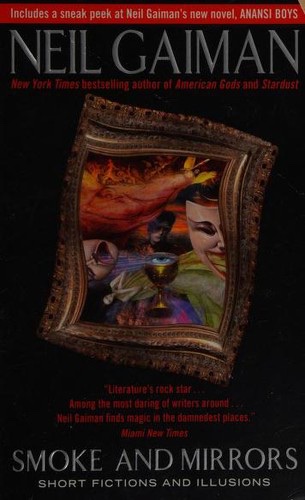
Cover of Smoke and Mirrors

Smoke and Mirrors

Neil Gaiman

5 ideas

  1. Fairy Tales Encode Adult Anxieties Beneath Childish Surfaces

    Familiar fairy-tale structures can be retold to expose the violence, sexuality, and dread they originally suppressed, revealing that the comforting children's version is a sanitized overlay on darker material. Inverting or completing the omitted parts forces the reader to confront what the original form deliberately hid.

  2. The Mundane As Disguise For The Numinous

    Ordinary settings — a suburban house, a roadside diner, a holiday gathering — are treated as thin membranes behind which mythic or supernatural forces operate unnoticed. Reading everyday life this way means assuming the strange is always already present, merely waiting for a shift in attention to become visible.

  3. Belief As The Engine That Sustains Gods

    Mythic beings persist only as long as people believe in or remember them, so gods and monsters weaken, migrate, or die when worship and attention fade. Their survival depends not on inherent power but on the continued investment of human imagination.

  4. Story As Misdirection Like A Magic Trick

    A narrative can be constructed like stage magic — using the obvious displayed element (the smoke) to distract from where the real maneuver occurs (the mirror), so the reader's expectations are deliberately steered toward the wrong conclusion. The payoff lands precisely because attention was managed rather than the information withheld.

  5. Mrs. Whitaker Buys the Holy Grail

    In the collection's story "Chivalry," Mrs. Whitaker, an elderly English widow, buys the Holy Grail for thirty pence at a local Oxfam charity shop and puts it on her mantelpiece. The knight Sir Galaad arrives at her door and offers her a series of legendary treasures for it, while she serves him tea and has him do chores. She finally trades the Grail for the Philosopher's Stone and a phoenix egg.

Save and mark ideas in the app