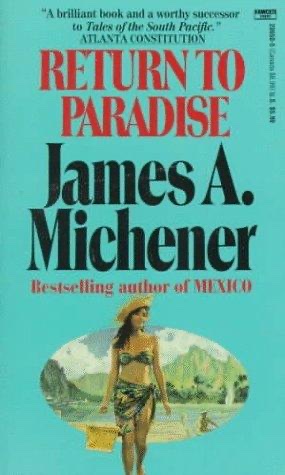
Cover of Return to Paradise

Return to Paradise

James A. Michener

5 ideas

  1. The Romanticized Pacific Hides Real Hardship

    The Western fantasy of the South Pacific as effortless paradise systematically erases the disease, isolation, poverty, and cultural dislocation that define actual island life. The traveler who arrives expecting Eden encounters instead a place where survival is precarious and beauty coexists with genuine suffering.

  2. The Beachcomber as Cultural Defector

    Certain Westerners abandon their home civilization and assimilate into island life, trading ambition and status for a slower existence the home culture reads as failure. This figure exposes that 'success' is a culturally specific bargain, not a universal good — what looks like a man throwing his life away may be a man who measured its costs differently.

  3. Wartime Occupation as Cultural Collision

    Viewing the Pacific through the lens of military occupation reveals how the sudden arrival of foreign soldiers, money, and machinery permanently reshapes small societies that had no part in the conflict. The islands become a stage where outside powers play out their struggles, leaving the local population transformed by forces they never chose.

  4. Narrative Paired with Direct Commentary

    Each region is presented twice — once as an analytical essay stating observations directly, and once as a dramatized story embodying those same observations in characters and events. The pairing tests whether an abstract claim survives translation into lived particulars, letting the reader check the argument against its enactment.

  5. Mr. Morgan Defies Pastor Corbett's Island Rule

    On the Polynesian atoll of Matareva, an American drifter named Morgan comes ashore and finds the islanders ruled by Pastor Corbett, a missionary who enforces a joyless moral code through his own watchmen. Morgan refuses to submit and breaks Corbett's grip on the island. He then stays on, takes an island wife, Maeva, and fathers a daughter, a story later filmed as Return to Paradise (1953) with Gary Cooper.

Save and mark ideas in the app