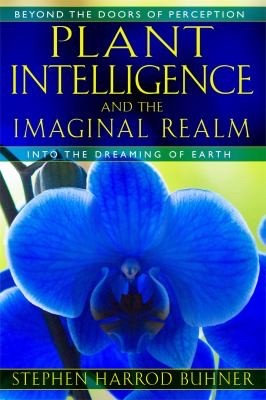
Cover of Plan Intelligence in the Imaginal Realm

Plan Intelligence in the Imaginal Realm

Stephen Harrod Buhner

6 ideas

  1. Plants Perceive and Respond Intelligently

    Plants actively gather information about their environment, evaluate it, and alter their behavior in response — synthesizing thousands of compounds on demand to address specific threats. This is not mechanical reflex but a form of cognition distributed throughout the organism without a centralized brain.

  2. The Imaginal Realm as Perceptual Mode

    The imaginal is a distinct mode of perception, separate from rational analysis, through which meaning and living essence are directly received rather than constructed. Entering it requires quieting the analytic mind and attending to the felt, qualitative dimension of what is perceived.

  3. Knowing Through Feeling-Toned Perception

    Reliable knowledge of living systems comes not from dissecting them into parts but from sensing the emotional or aesthetic tone a thing emits and letting that meaning unfold. One holds a question while remaining receptive, allowing the organism to disclose itself through the quality of feeling it evokes.

  4. Biocentrism Over Anthropocentric Hierarchy

    Viewing the world biocentrically dissolves the assumed hierarchy that places human intelligence at the top and treats other life as inert resource. Seen this way, every organism is a meaning-making subject with its own intelligence, interiority, and intentions rather than an object to be used.

  5. Mechanistic Science Blinds Perception

    The reductionist habit of breaking nature into measurable parts trains perception to ignore the living wholeness and self-organizing intelligence of organisms. By insisting only the quantifiable is real, this stance actively prevents the perceiver from registering the very phenomena that would refute it.

  6. Communication Across Species Boundaries

    Organisms exchange chemical, electrical, and energetic signals that constitute a genuine language operating between species, including between plants and humans. Attending to these signals as communication — rather than noise or coincidence — makes a two-way exchange of meaning possible.

Save and mark ideas in the app