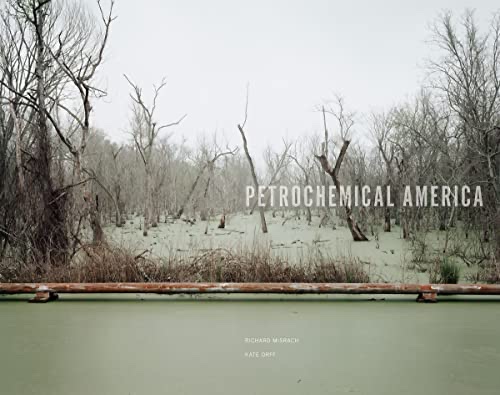
Cover of Petrochemical America

Petrochemical America

Richard Misrach and Kate Orff

6 ideas

  1. The Aesthetic Beauty of Toxic Landscapes

    Industrial and contaminated sites can be photographed as visually seductive — sublime skies, glowing refineries, painterly haze — and this beauty is not a distraction but a trap that forces the viewer to confront their own complicity in the systems producing the damage. The pleasure of looking becomes the entry point for ethical reckoning rather than its enemy.

  2. Cancer Alley as Spatial Concentration of Harm

    The 150-mile petrochemical corridor along the lower Mississippi River demonstrates how industrial pollution clusters geographically, layering refineries, plants, and waste sites onto specific communities. Harm is not evenly distributed but concentrated in places where land was cheap, regulation weak, and residents — often poor and Black — had the least power to refuse.

  3. The Ecological Atlas as Annotation Layer

    Photographs alone show surfaces; pairing them with diagrammatic 'glossaries' and infographics overlays the invisible systems — supply chains, chemical pathways, economic flows — onto the visible scene. This two-part method lets a single image function as both emotional witness and analytical map, connecting what is seen to what cannot be photographed.

  4. Petrochemicals Are Embedded in Everyday Life

    The same industrial processes that poison the landscape produce the plastics, fertilizers, fabrics, and packaging that constitute ordinary modern existence. Therefore the consumer cannot stand outside the system as a neutral observer — the pollution and the convenience are two ends of one continuous chain.

  5. Reading Landscape as Layered Time

    A single site can be seen as a palimpsest holding plantation history, river engineering, industrial development, and present-day toxicity all at once. Viewing land this way reveals that current environmental conditions are sedimented from past economic and racial decisions, not accidents of the present moment.

  6. Homes Bordering Refinery Fence Lines

    Photographs show modest houses, playgrounds, and cemeteries sitting directly against the perimeters of massive chemical facilities, with smokestacks looming over backyards. This proximity makes concrete the abstract phrase 'fence-line community' — people live, sleep, and bury their dead within breathing distance of continuous industrial emissions.

Save and mark ideas in the app