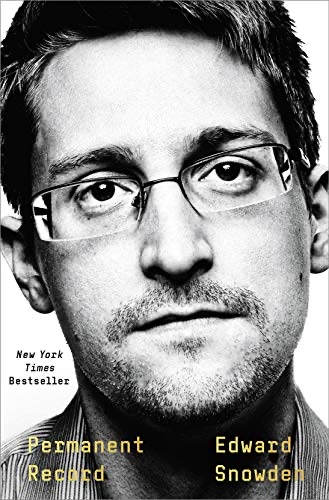
Cover of Permanent Record

Permanent Record

Edward Snowden

5 ideas

  1. Metadata reveals more than content

    Metadata — who you called, when, from where, for how long — is more revealing than the content of communications because it is structured, machine-readable, and aggregable across millions of people. Surveillance systems prioritize metadata precisely because it maps relationships, movements, and patterns of life without requiring anyone to read a single message.

  2. Mass surveillance is built incrementally and invisibly

    Surveillance infrastructure expands not through a single announced decision but through quiet technical and legal increments, each justified as a minor extension of existing authority. By the time the full system is operational, no public debate ever occurred because every step was small enough to escape scrutiny.

  3. Privacy as the precondition for selfhood

    Privacy is not about hiding wrongdoing but about preserving the space in which a person can think, experiment, and become someone — a self requires an unobserved interior to develop. Saying you don't care about privacy because you have nothing to hide is like saying you don't care about free speech because you have nothing to say.

  4. The permanent record of erased data

    Deleted data is rarely gone; storage systems retain copies, backups, and fragments that make digital erasure largely an illusion. Every action online contributes to an indefinitely retained record that outlives the moment, the device, and often the person's awareness that it exists.

  5. Snowden's NSA leak from Hawaii to Hong Kong

    While working as a contractor at NSA facilities in Japan and then Hawaii, Edward Snowden found classified evidence, including a secret NSA Inspector General report on the STELLARWIND program, that the agency was collecting Americans' communications in bulk. In May 2013 he copied a cache of documents, flew to Hong Kong, and handed them to journalists Glenn Greenwald, Laura Poitras and Ewen MacAskill at the Mira Hotel. Their June 2013 reports exposed the Verizon phone-records order and PRISM, and after the U.S. revoked his passport he was stranded in Moscow's Sheremetyevo airport en route to Latin America and has lived in Russia since.

Save and mark ideas in the app