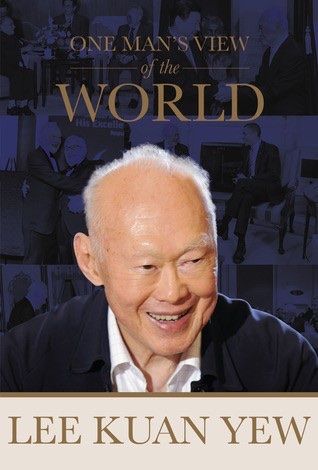
Cover of One man's view of the world

One man's view of the world

Lee Kuan Yew

6 ideas

  1. China Will Not Adopt Liberal Democracy

    China's leaders see one-party rule as essential to managing a continent-sized population, and they fear the chaos that competitive politics could unleash across regions and ethnic groups. Their goal is to be a strong, modern nation governed by a meritocratic Party, not to converge toward Western political norms as outsiders expect.

  2. Demography As National Destiny

    A nation's long-term trajectory is constrained by its fertility and population structure: below-replacement birth rates shrink the workforce and burden the young with supporting the old, weakening economic dynamism. Immigration can offset this only if a society is culturally willing to absorb newcomers, which many ageing societies are not.

  3. Judge Nations By Capacity Not Intentions

    Strategic assessment should rest on a country's actual capabilities — its economy, military, talent pool, and institutional resilience — rather than on its current rhetoric or stated goodwill. Intentions change overnight while capabilities take decades to build, so durable analysis tracks what a state can do, not what it currently says it wants.

  4. America's Renewal Engine Is Openness

    The United States retains primacy because it attracts and absorbs the world's best talent and tolerates restless entrepreneurial failure, continuously regenerating itself. Its capacity for self-criticism and reinvention is a structural advantage that more hierarchical or homogeneous societies cannot easily replicate.

  5. Small State Survival Through Relevance

    A small nation has no inherent right to exist and must continuously make itself useful and exceptional — through superior governance, a skilled workforce, and a stable rule of law — to stay valuable to larger powers. Survival depends on being so well-run that bigger players gain more by dealing with you than by absorbing or ignoring you.

  6. Culture Constrains Economic Outcomes

    Whether a society prizes saving, education, deferred gratification, and collective discipline shapes its economic performance more than the policies layered on top. Cultures that emphasize these traits accumulate human capital and stability, while those that don't struggle to convert resources or aid into lasting development.

Save and mark ideas in the app