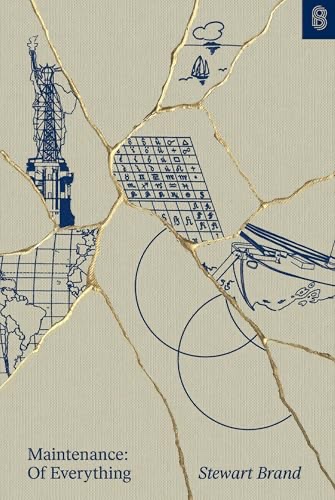
Cover of Maintenance: Of Everything Part One

Maintenance: Of Everything Part One

Stewart Brand

6 ideas

  1. Maintenance Dwarfs Creation in Real Cost

    The vast majority of an object's or system's total lifetime expenditure—in money, labor, and attention—occurs after it is built, not during creation. Designers and budgets fixate on the glamorous moment of construction while ignoring the decades of upkeep that actually determine whether something survives.

  2. Maintenance as Invisible Until Failure

    Maintenance is structurally thankless because its success is the absence of an event—nothing breaks, nothing is noticed. It only becomes visible when it fails, which means the people who do it well are systematically under-recognized and under-funded.

  3. Pace Layering of Change Rates

    Any durable system is composed of layers that change at different speeds—fast layers (fashion, commerce) sit atop slow layers (infrastructure, governance, nature)—and the slow layers provide stability while the fast ones provide adaptation. Maintenance is the practice of keeping each layer functioning at its proper rate so the whole structure neither freezes nor shatters.

  4. Seeing Objects as Ongoing Relationships

    An object should be viewed not as a finished product but as a continuing relationship requiring attention, repair, and adjustment over time. This shift reveals that ownership is really stewardship, and the question is never 'what did it cost' but 'what will it keep costing in care.'

  5. Repairability Determines Longevity

    Whether a thing endures depends less on how well it is made than on how easily it can be opened, understood, and fixed. Sealed, proprietary, or undocumented systems are doomed regardless of build quality, while modular, accessible, well-documented ones can be maintained indefinitely.

  6. Maintenance as Active Knowledge Transmission

    Keeping something running requires continuously transmitting the tacit knowledge of how it works to new caretakers, because the skill to maintain a system decays faster than the system itself. When the people who understood the machine retire or die without passing it on, the machine becomes unmaintainable even if physically intact.

Save and mark ideas in the app