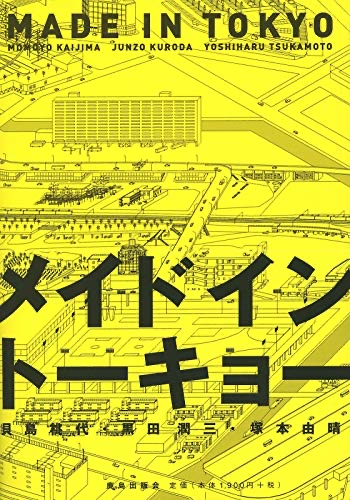
Cover of Made in Tokyo

Made in Tokyo

Momoyo Kaijima, Junzo Kuroda, Yoshiharu Tsukamoto

3 ideas

  1. Da-me Architecture as Useful Ugliness

    Buildings dismissed as 'no-good' by aesthetic standards can be exemplary in their honest response to environment and function — they prioritize practical utility over good design. The crossbreeding of incompatible programs and crude structural fixes produces a vitality that conventionally beautiful architecture lacks.

  2. Reading Buildings as Environmental Machines

    A building should be understood not as an isolated object but as a device that absorbs and resolves the contradictory demands of its surrounding infrastructure, topography, and economics. Examining how a structure swallows a highway, expressway pillar, or rail line reveals the hidden logic of the city more than its facade ever could.

  3. Categorizing by Hybrid Cross-Programming

    Buildings can be classified by how they fuse unrelated functions into single structures — a driving range stacked on a department store, a temple combined with a parking garage. The naming of each hybrid (compound nouns of mismatched uses) becomes an analytic tool for mapping how dense cities force programs to coexist vertically and adjacently.

Save and mark ideas in the app