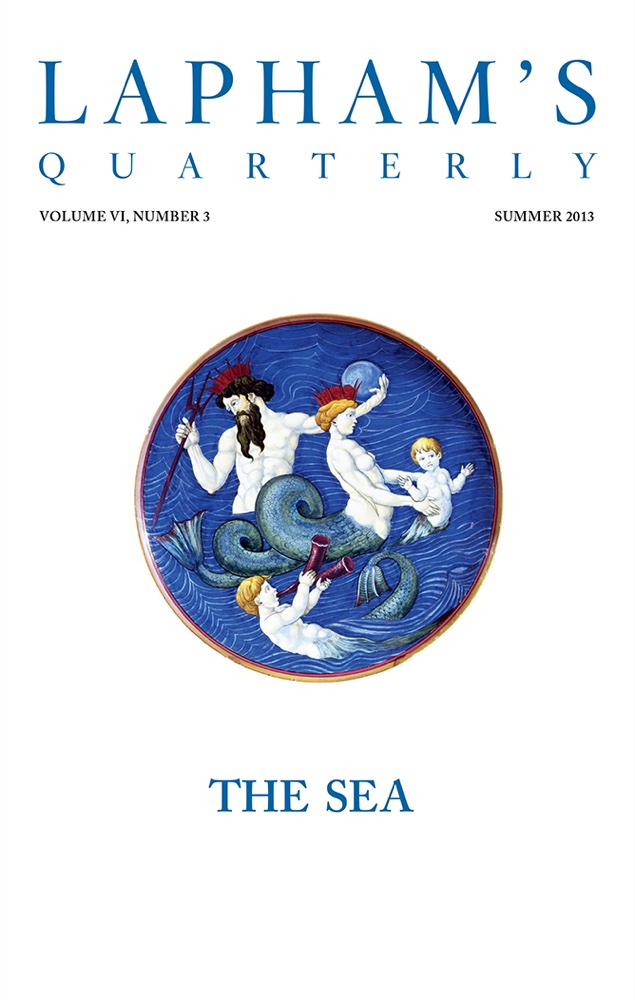
Cover of Lapham's Quarterly: The Sea

Lapham's Quarterly: The Sea

Lewis H. Lapham (ed.)

4 ideas

  1. Freedom at Sea Carries a Price

    The sea grants a distinct kind of liberation — escape from land-bound rules, obligations, and identities — but that freedom is inseparable from exposure to danger, isolation, and the indifference of nature. The same absence of constraint that liberates also removes the safety net, so the reward and the risk are structurally the same thing.

  2. The Prostitute Who Built a Pirate Empire

    Zheng Yi Sao, a Cantonese prostitute, married a pirate captain in 1801 and expanded his operation into a fleet of four hundred junks and tens of thousands of pirates by 1805. Her scale grew so threatening that the Chinese government chose to negotiate amnesty rather than absorb continued losses — showing that overwhelming force can convert an outlaw into a party the state must bargain with.

  3. Solitude as the Companion Trial to Danger

    Long voyages impose two separable ordeals: the physical threat of the environment and the psychological strain of prolonged aloneness. Endurance requires mastering not just external hazard but the mind's response to isolation, which can be the harder and more destabilizing of the two.

  4. The Sea as Greatness in Motion

    A troubled ocean can be viewed as the largest moving object a person can perceive, and this scale of motion produces a specific aesthetic pleasure rooted in vastness rather than beauty. Viewing overwhelming natural phenomena through the category of 'greatness' reframes fear-inducing spectacle as a source of imaginative elevation.

Save and mark ideas in the app