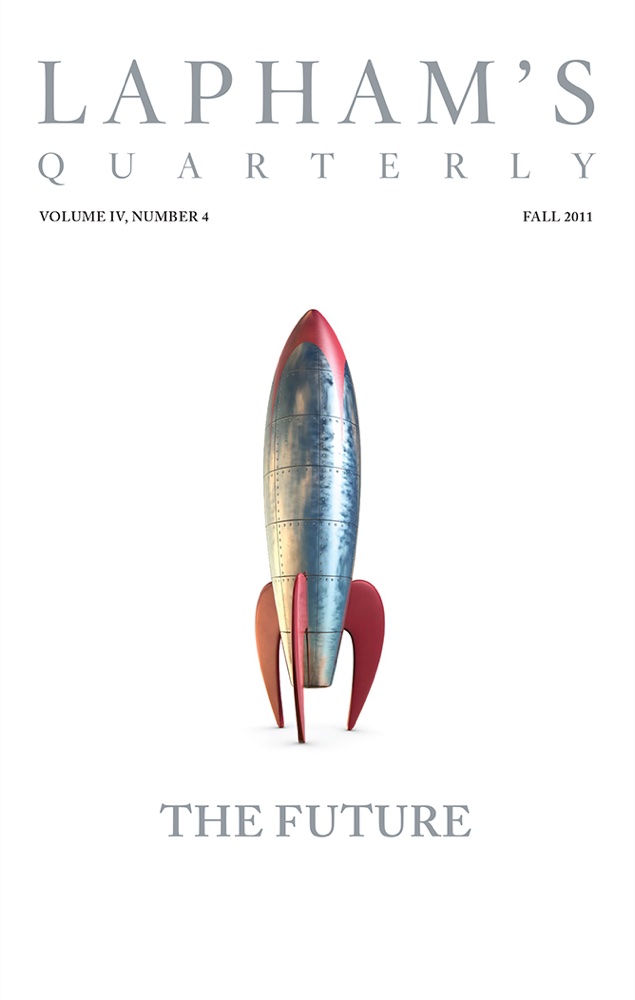
Cover of Lapham's Quarterly: The Future

Lapham's Quarterly: The Future

Lewis H. Lapham (ed.)

4 ideas

  1. Predictions Reveal the Present, Not the Future

    Any forecast of what is to come is shaped by the anxieties, desires, and assumptions of the moment it is made, making it a better mirror of the predictor's present than a window onto actual coming events. To read old predictions is therefore to study the psychology of the era that produced them.

  2. Asymmetry of Temporal Certainty

    The three tenses carry radically different epistemic weight: the past is fixed and knowable, the present is fleeting, and the future is fundamentally unknowable. This asymmetry means our confidence should scale inversely with how far forward we project.

  3. Confident War Timelines That Failed

    Rumsfeld predicted the Iraq war would last six days to six months, while Eisenhower and McNamara forecast inevitable victory in Vietnam years before defeat. Authority and access to information do not immunize experts against catastrophically wrong predictions delivered with total confidence.

  4. Novel Ends Require Untried Means

    Achieving something never before accomplished is impossible using only methods already tried and known, because established means have by definition already failed to produce the unprecedented result. Genuine innovation demands the invention of new instruments and approaches, not the refinement of familiar ones.

Save and mark ideas in the app