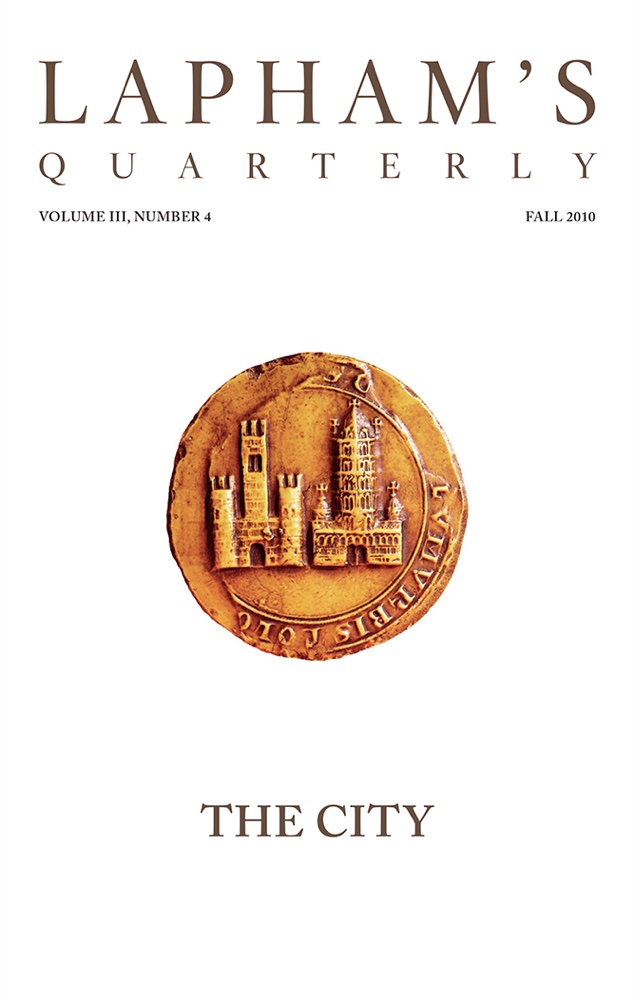
Cover of Lapham's Quarterly: The City

Lapham's Quarterly: The City

Lewis H. Lapham (ed.)

4 ideas

  1. Cities concentrate human possibility and decay together

    The same density that produces art, commerce, and intellectual exchange also concentrates disease, crime, and exploitation in the same square mile. A city cannot import its splendor without also importing its squalor, because both arise from the identical mechanism of packing strangers into shared space.

  2. The city as a stage for anonymity

    Urban scale dissolves the village's mutual surveillance, letting a person be unknown among millions and therefore free to reinvent identity. This anonymity is simultaneously liberating and isolating — it frees the individual from inherited reputation while severing the bonds that would otherwise catch them when they fall.

  3. The walkable street as civic encounter

    Public life depends on physical thresholds where unlike people are forced into incidental contact — the market, the square, the crowded sidewalk. When these mixing zones are engineered away by private enclosures or car-centric design, the city loses the friction that generates a shared civic identity.

  4. Cities outlive the regimes that build them

    A city accumulates layers of inhabitants, rulers, and ruins, so that any single empire or government is merely a temporary tenant of a place that predates and will survive it. The continuity belongs to the streets and stones, not the authorities who claim to govern them.

Save and mark ideas in the app