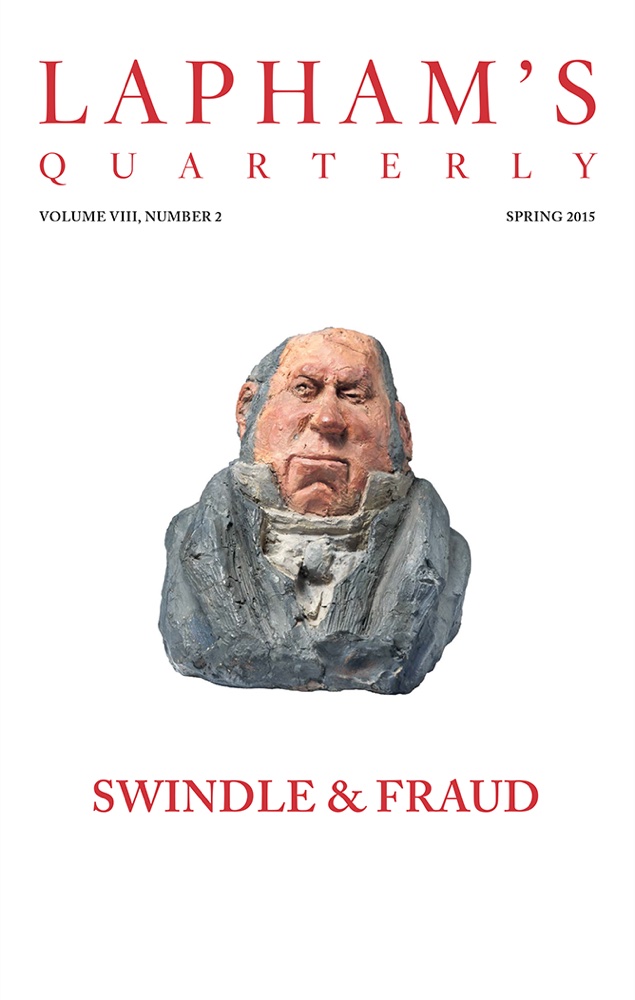
Cover of Lapham's Quarterly: Swindle & Fraud

Lapham's Quarterly: Swindle & Fraud

Lewis H. Lapham (ed.)

4 ideas

  1. The Con Requires a Willing Mark

    Successful fraud depends less on the swindler's cleverness than on the victim's active desire to believe — the mark's greed, vanity, or wish for an easy win supplies the fuel. Americans in particular pair a genius for deception with an infallible willingness to play the fool, meaning the deceived are complicit in their own deception.

  2. Life Imitates Art, Not Reverse

    Wilde's inversion holds that reality organizes itself to match our fictions and lies rather than the other way around — the artful fib shapes how people actually behave and perceive. The persuasive falsehood becomes a template that the world then dresses itself up to fulfill.

  3. Fraud as Ordinary Commerce

    Selling a product and running a swindle operate on the same mechanism: manufacturing desire through exaggerated claims and then extracting payment. Framed this way, marketing, salesmanship, and outright fraud sit on a single continuous spectrum rather than in separate moral categories.

  4. The Secondhand Shop 'Pressing Done Here'

    Kierkegaard describes a sign reading 'pressing done here' in a secondhand shop — if you bring clothes to be pressed, you're duped, because the sign itself is the item for sale, not a service offered. The illustration shows how language can advertise a promise it has no intention of keeping, deceiving through literal-but-hollow claims.

Save and mark ideas in the app