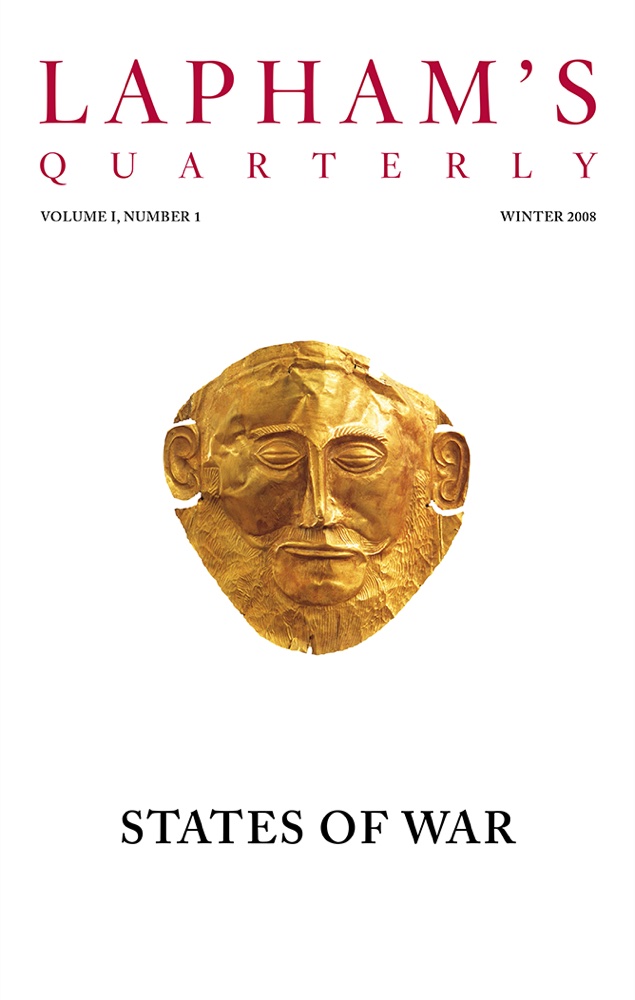
Cover of Lapham's Quarterly: States of War

Lapham's Quarterly: States of War

Lewis H. Lapham (ed.)

4 ideas

  1. War as Display of Cosmic Dominance

    For some rulers, warfare is not primarily a strategic calculation aimed at defeating an enemy but a ritual performance meant to demonstrate universal mastery to gods and subjects alike. The scale, spectacle, and expense of the campaign matter more than efficiency because the true objective is the visible assertion of the ruler's supremacy over the whole world.

  2. Violence as the Foundation of Political Power

    Political authority does not ultimately rest on consent, law, or ideology but on the capacity to inflict force — every governing order is backed by the credible threat of the gun. Reading politics through this lens exposes the coercion hidden beneath apparently peaceful institutions.

  3. The Bureaucratization of Assassination

    A 1954 CIA manual reduces the killing of political enemies to a technical procedure, offering detached, methodical advice on how to eliminate targets cleanly. It shows how administrative language and instructional format can normalize atrocity by stripping it of moral weight and treating murder as a routine operational task.

  4. Reconciliation Without Vengeance in Victory

    The victor in conflict can choose to renounce triumphalism, refusing to punish the defeated and instead binding old wounds through deliberate magnanimity. Lincoln's 'with malice toward none' articulates a stance where the moral purpose of ending a war is to rebuild a shared community rather than to extract retribution.

Save and mark ideas in the app