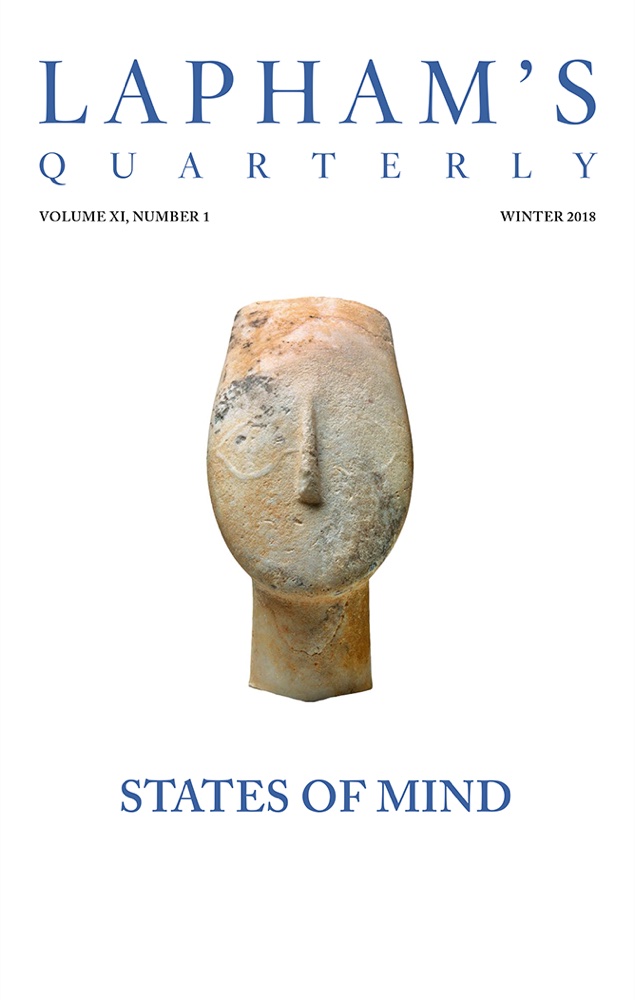
Cover of Lapham's Quarterly: States of Mind

Lapham's Quarterly: States of Mind

Lewis H. Lapham (ed.)

4 ideas

  1. Memory Reconstructs Rather Than Retrieves

    The mind actively reinterprets and reshapes memories of the past rather than storing them as fixed records; each act of recollection reconstructs the event through the present moment's frame. This means history and personal memory are not retrieval but reinvention.

  2. Untranslatable Words For Mental States

    Certain words describing mental states exist in one language with no direct equivalent in another, meaning some experiences of consciousness are nameable only within a specific culture. The vocabulary a culture possesses shapes which inner states its members can readily identify and share.

  3. Mind's Location As Cultural Assumption

    The question 'where does the mind reside' has been answered differently across eras — heart, brain, spirit, distributed through the body — and each answer reflects the era's assumptions rather than settled fact. Locating consciousness is a philosophical commitment dressed as an anatomical observation.

  4. Rational Cognition Underrates Bodily Sensation

    Treating pure rational cognition ('I think, therefore I am') as the essence of selfhood ignores that bodily sensation and physical suffering are equally constitutive of conscious experience. An account of the mind that omits the toothache omits how minds are actually inhabited.

Save and mark ideas in the app