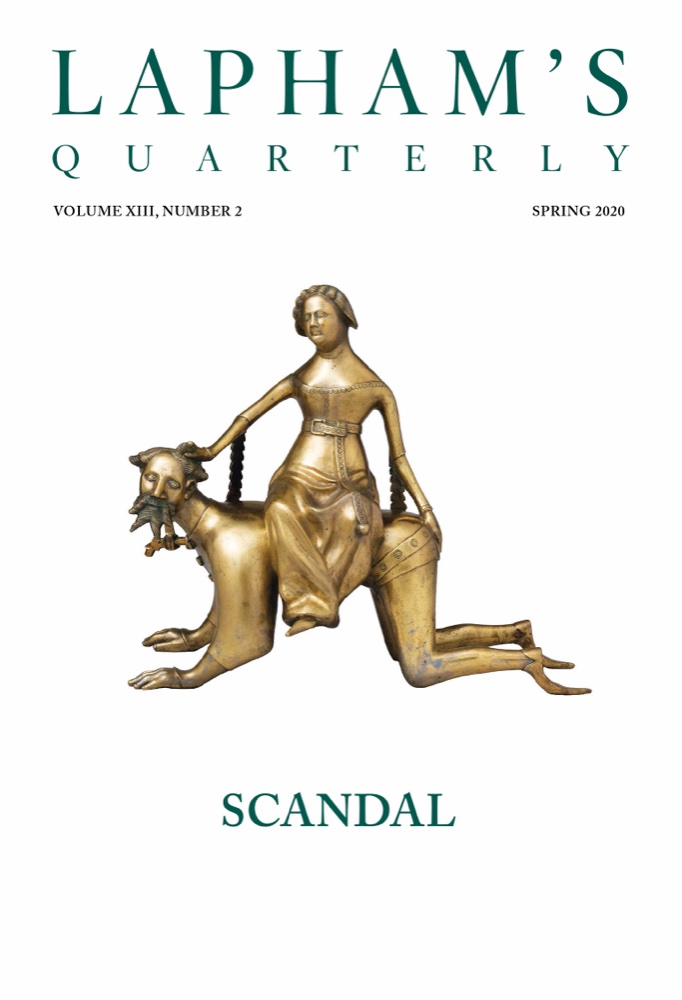
Cover of Lapham's Quarterly: Scandal

Lapham's Quarterly: Scandal

Lewis H. Lapham (ed.)

4 ideas

  1. Truth as Trial by Combat

    In France's last judicial duel, a rape accusation was resolved not by evidence but by which man survived armed combat, so a woman's credibility literally depended on her husband winning a fight. When institutions lack tools to weigh testimony, they substitute physical spectacle for verification, turning the question 'was she believed?' into 'who was stronger?'

  2. Publicity as a Weapon Against Power

    Exposing hidden abuses — like Leopold's Congo atrocities or suppressed news — works by converting private wrongdoing into public knowledge that the powerful cannot control. The reformer's core lever is not law but light: 'let in the light' assumes visibility itself forces accountability that arguments alone cannot.

  3. The Fugitive Geography of Disgrace

    Every scandal produces a predictable next phase: the disgraced flee to places chosen for distance, anonymity, or lack of extradition. Scandal is thus not just a moral event but a spatial one, generating recurring routes of exile that map where consequences can and cannot reach.

  4. Scandal as Enduring Entertainment Appetite

    The fascination with scandal is not modern tabloid degeneracy but a permanent human hunger for the spectacle of others' transgressions and falls. Reading history through this lens reveals gossip, rumor, and disgrace as a constant cultural engine — 'a false report rides post' — that spreads faster than truth in every era.

Save and mark ideas in the app