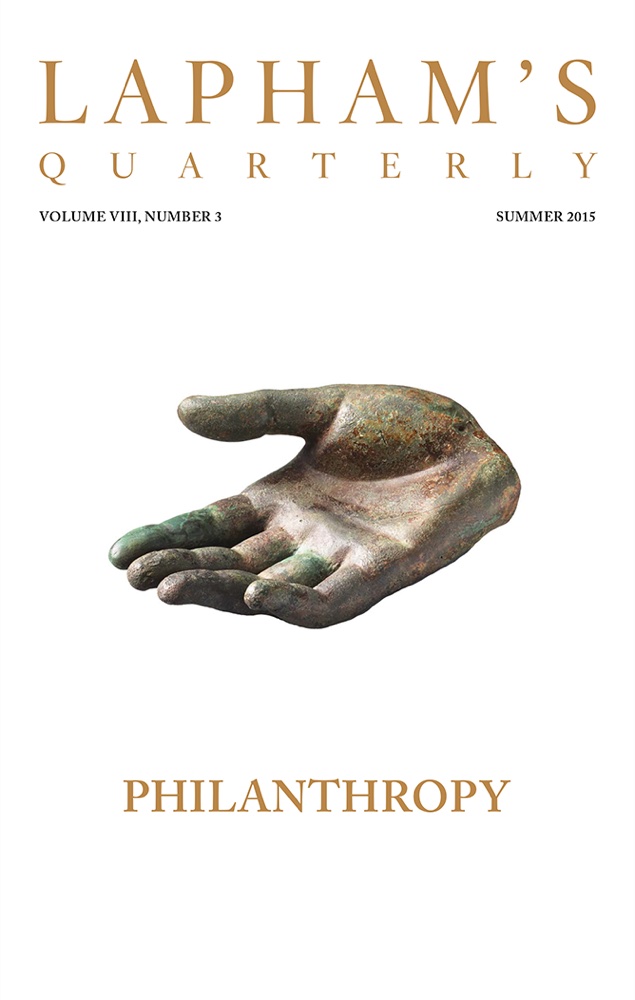
Cover of Lapham's Quarterly: Philanthropy

Lapham's Quarterly: Philanthropy

Lewis H. Lapham (ed.)

4 ideas

  1. Charity Reoriented from City to God

    Early Christians like Augustine transformed giving by making its beneficiary God rather than the civic community, so that alms to the poor became a transaction storing 'treasure in heaven' instead of buying earthly reputation. This shifted the reward of generosity from public honor granted by fellow citizens to salvation granted by an invisible ultimate authority.

  2. Giving Reveals the Giver's Real Motive

    Every act of philanthropy can be read as a bid for something in return — status, salvation, control, or self-justification — rather than as pure benevolence. Examining who is watching and what the giver expects to receive exposes the transactional structure underneath apparently selfless generosity.

  3. Tolstoy's Collapse of Charitable Spirit

    After running a peasant school and organizing famine relief, Tolstoy eventually lost faith in charity, reacting to a report of the destitute eating rotten food at Moscow's Khitrov market with resignation rather than aid. The arc shows how sustained exposure to intractable poverty can erode a benefactor's will to give rather than deepen it.

  4. Wealth Without Virtue Is Worthless

    Riches and social honor, if unaccompanied by moral character, are as insubstantial and fleeting as a passing cloud. The measure of a person's worth lies in virtue, not in accumulated resources or status, so greatness is available to the poor and denied to the merely rich.

Save and mark ideas in the app