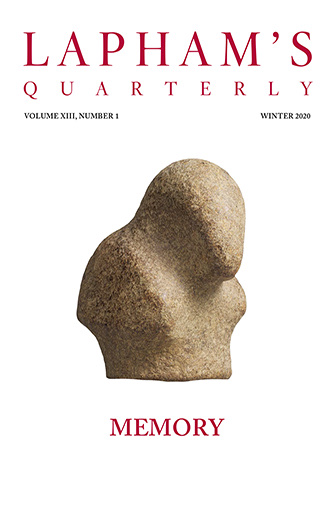
Cover of Lapham's Quarterly: Memory

Lapham's Quarterly: Memory

Lewis H. Lapham (ed.)

4 ideas

  1. Ownership of the Past Shapes the Present

    History is not a neutral record but a contested possession — whoever controls how the past is remembered controls the stories a society tells about itself. The struggle over memory is therefore a struggle over authority and identity.

  2. Outsourcing Memory to Machines

    When we train machines to remember for us, we shift the burden of retention outward, raising the question of how much a mind can safely forget without losing itself. The value of memory may lie not in total retention but in the selective forgetting that lets meaning form.

  3. Memory as Construction of Self

    The self is not a fixed entity but an ongoing act of remembering — we become who we are by assembling and reassembling our past into a coherent narrative. Change the memories or their arrangement, and the identity they support changes with them.

  4. We Trust Faulty Memory Over Judgment

    People readily admit their memory is unreliable yet almost never doubt the quality of their own judgment. This asymmetry reveals that we treat judgment as core to our self-image while treating memory as a mere tool that can fail us.

Save and mark ideas in the app