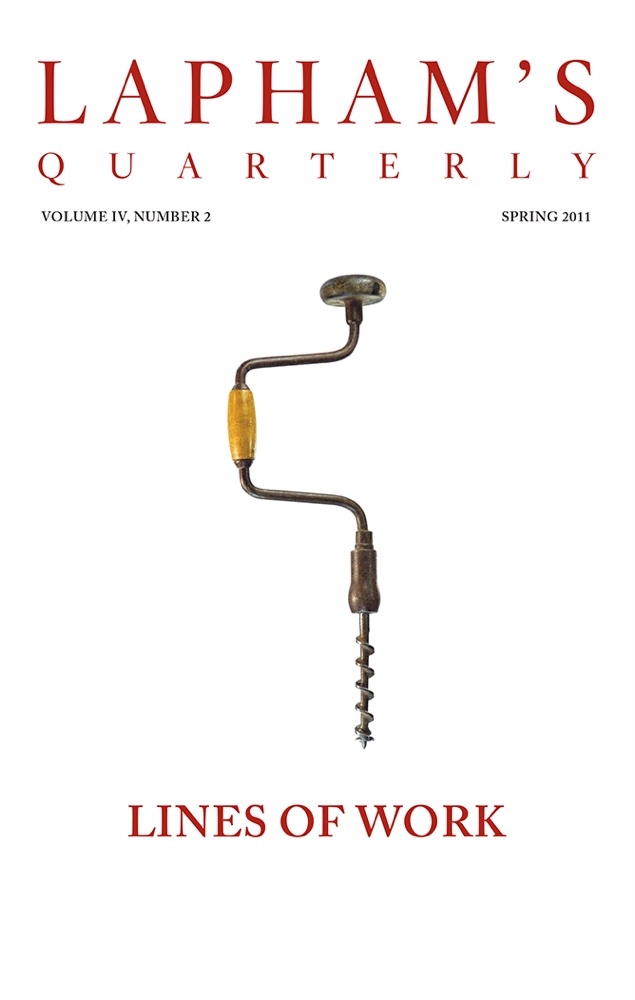
Cover of Lapham's Quarterly: Lines of Work

Lapham's Quarterly: Lines of Work

Lewis H. Lapham (ed.)

4 ideas

  1. Paperwork Resists Heroic Narrative

    Paperwork is invisible in our cultural idea of work because it produces no dramatic heroes and generates little sympathy — it is the friction and administrative residue of labor rather than its glory. This makes bureaucratic effort systematically undervalued even as it consumes enormous human time and attention.

  2. Vocation as Divinely Assigned Position

    Calvin frames work not as personal ambition or market choice but as a station assigned by God, where finding your calling means discerning and accepting a predetermined role. This reframes labor as duty and obedience rather than self-actualization or advancement.

  3. Believing Your Trade Is Supreme

    The strongest predictor of professional success is not skill or resources but the conviction that one's own profession is the finest in the world. This self-reinforcing belief supplies the motivation and identity that competence alone cannot.

  4. Doing Something Versus Purpose

    Human nature compels us to be busy — or at least to convince ourselves we are busy — regardless of whether that activity serves any coherent end. The instinct to work often outruns and obscures any question of what the work is actually for.

Save and mark ideas in the app