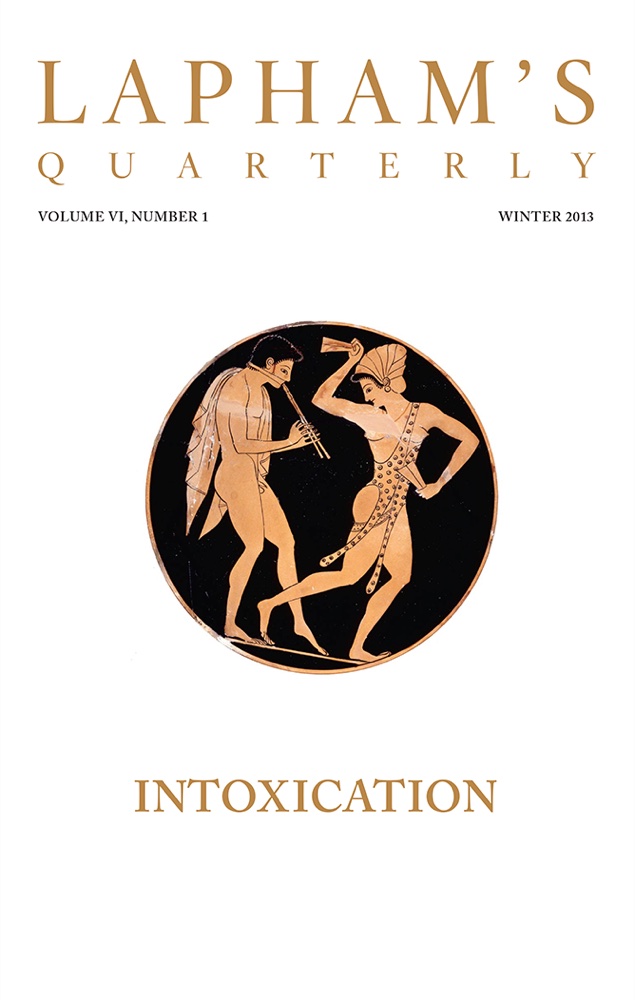
Cover of Lapham's Quarterly: Intoxication

Lapham's Quarterly: Intoxication

Lewis H. Lapham (ed.)

4 ideas

  1. Marcus Aurelius Trapped Between Two Discomforts

    The emperor took opium for pain but disliked its drowsiness, so he quit — only to find he could no longer sleep, forcing him back onto the drug. The case shows how a substance taken for one problem creates a dependency that becomes its own separate problem, leaving the user worse off than before they started.

  2. Intoxication Should Mitigate Legal Culpability

    Actions committed when the senses are 'steeped in intoxication' arguably fall outside the reach of laws that punish deliberate evil, because impaired judgment severs the link between intent and act. This raises the question of whether responsibility requires a clear mind to be meaningfully assigned.

  3. The Object of Intoxication Is Open

    Baudelaire's imperative 'one should always be drunk' deliberately leaves the intoxicant unspecified — one can be drunk on wine, poetry, virtue, or work. Intoxication is reframed not as a chemical event but as any state of self-transcendence that lifts a person out of ordinary consciousness.

  4. Withdrawal Is Mundane, Not Cinematic

    Real drug withdrawal has no dramatic arc — 'you just lie there and suffer' — contrasting sharply with the theatrical convulsions of film. Viewing suffering through this lens exposes how popular depictions falsify experience by adding spectacle where there is only endurance.

Save and mark ideas in the app