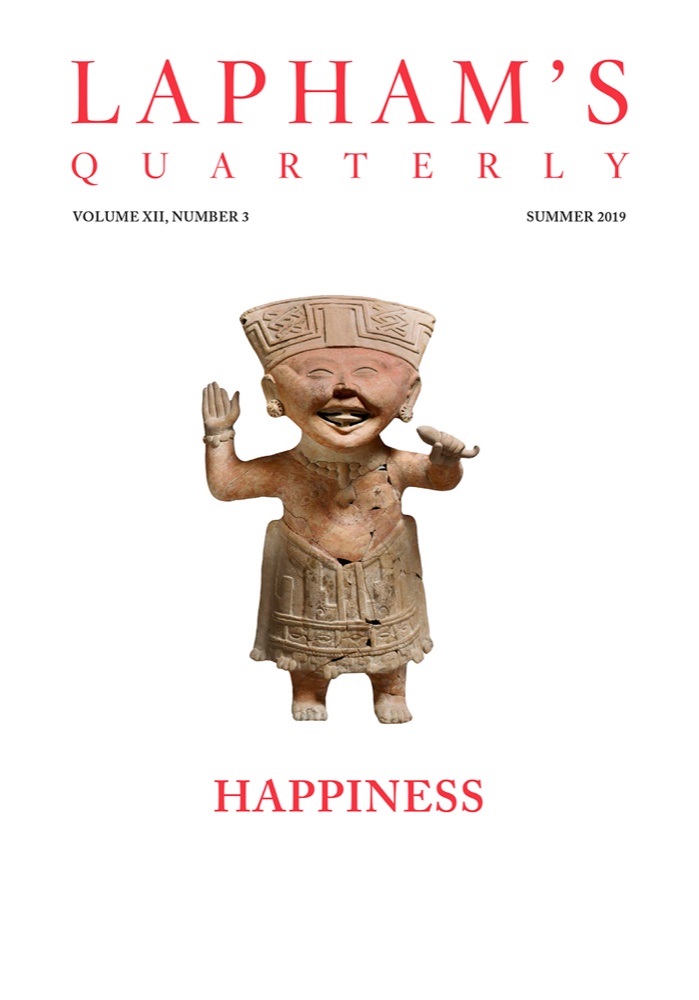
Cover of Lapham's Quarterly: Happiness

Lapham's Quarterly: Happiness

Lewis H. Lapham (ed.)

4 ideas

  1. The Pursuit of Happiness Is Self-Defeating

    Building a culture around the active pursuit of happiness produces the opposite of its aim, because happiness is an emotional state that recedes when chased directly and cannot be secured through effort or acquisition. Treating it as a goal to be attained turns life into a series of disappointments measured against an impossible standard.

  2. Institutionalizing Happiness as State Policy

    A government can create a formal Ministry of Happiness that treats citizen wellbeing as a measurable administrative outcome rather than a private matter. This reframes happiness from a personal pursuit into a metric governments are responsible for producing and optimizing.

  3. Most People Rate Themselves Happiest

    When asked to identify the happiest person in a room, most individuals point to themselves, revealing a systematic bias toward believing one is happier than others. This suggests self-assessed happiness is inflated by comparison and self-regard rather than an objective read of one's actual state.

  4. Happiness Calibrated Between Fear and Hope

    Emotional experience is distorted at both extremes: dread makes anticipated suffering worse than it turns out to be, while hope makes anticipated joy greater than it delivers. Reality consistently lands in the muted middle between our worst fears and our best hopes.

Save and mark ideas in the app