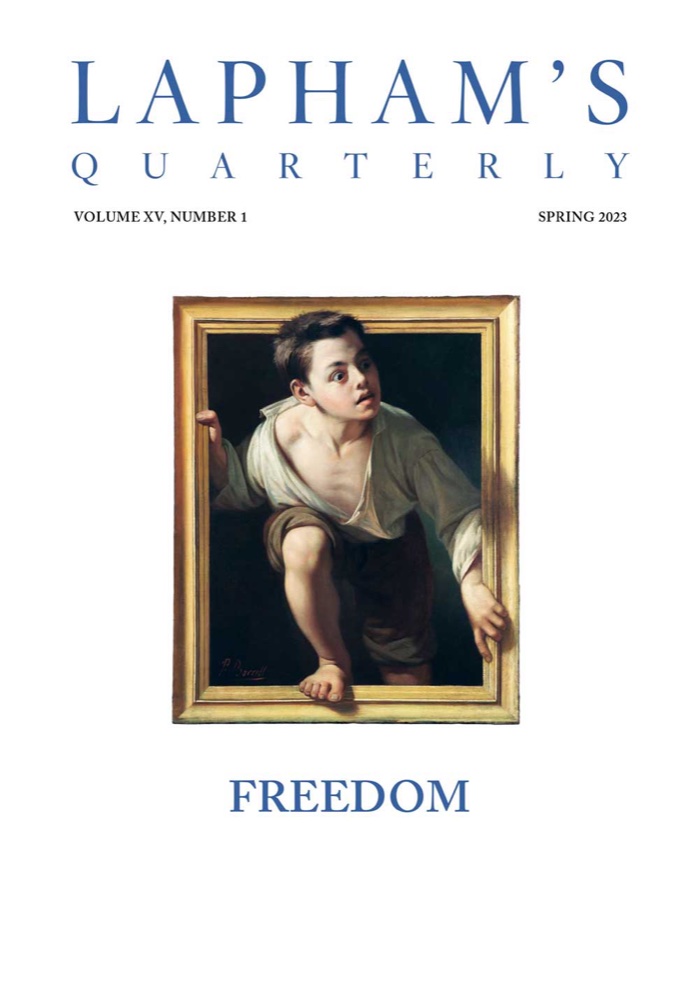
Cover of Lapham's Quarterly: Freedom

Lapham's Quarterly: Freedom

Lewis H. Lapham (ed.)

4 ideas

  1. Freedom Cannot Be Given, Only Taken

    Pushing someone toward liberty does not set them free, and removing a prisoner's chains does not itself confer freedom. Liberation is an internal act of will and self-authorship; external release only creates the conditions in which someone may or may not become free.

  2. The Will Cannot Be Licensed

    Genuine moral choice requires the possibility of choosing wrong; a virtue that is compelled or permitted only under supervision is no virtue at all. Compelling correct behavior destroys the very freedom that gives moral action its worth.

  3. Freedom's Descent Into Forgetfulness

    A society can lose freedom not through overt tyranny but by forgetting what freedom actually is — treating it as consumer choice or self-indulgence rather than collective self-governance. The concept erodes when the vocabulary and practices that once made it meaningful atrophy from disuse.

  4. Benjamin Lay's Relentless Radicalism

    Benjamin Lay pursued abolition with an uncompromising, theatrical extremism that alienated even sympathizers, refusing all half-measures and social comfort. His case shows how moral clarity ahead of its time is often expressed through disruptive, seemingly fanatical acts that only later appear prophetic.

Save and mark ideas in the app