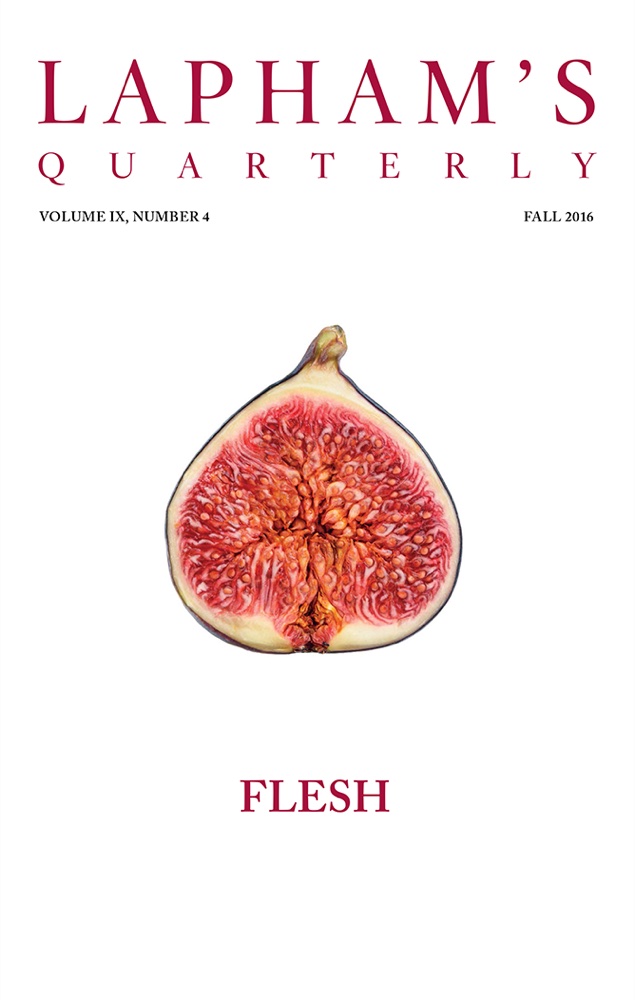
Cover of Lapham's Quarterly: Flesh

Lapham's Quarterly: Flesh

Lewis H. Lapham (ed.)

4 ideas

  1. The Four Humors as Body-State Model

    Health was explained as the balance of four bodily fluids — blood, phlegm, yellow bile, black bile — each tied to an element, season, and temperament. Illness was read as an excess or deficit of a humor, so treatment aimed to restore equilibrium by draining, purging, or adding what was lacking.

  2. Redesigning Sex Through Communal Rules

    A community can deliberately dismantle the default pairing of sex and exclusive marriage by replacing it with an engineered system where relations are collective, regulated, and detached from private ownership. This treats intimacy not as a natural given but as an institution that can be reinvented according to a group's chosen principles.

  3. Nero Buys an Olympic Victory

    Nero, physically unfit and described as having a fat neck and potbelly, entered the Olympic chariot race in 67, fell from his vehicle, and failed to finish — yet was declared the winner after bribing the judges. Power lets a person purchase the appearance of physical achievement while the actual bodily performance is a failure.

  4. The Body as Perishable Commodity

    The flesh is treated across history as a temporary asset — valued, priced, consumed, and inevitably decaying — rather than a fixed possession. Because the body is perishable, cultures invest enormous energy in disguising, prolonging, or transcending its decline through art, medicine, and belief.

Save and mark ideas in the app