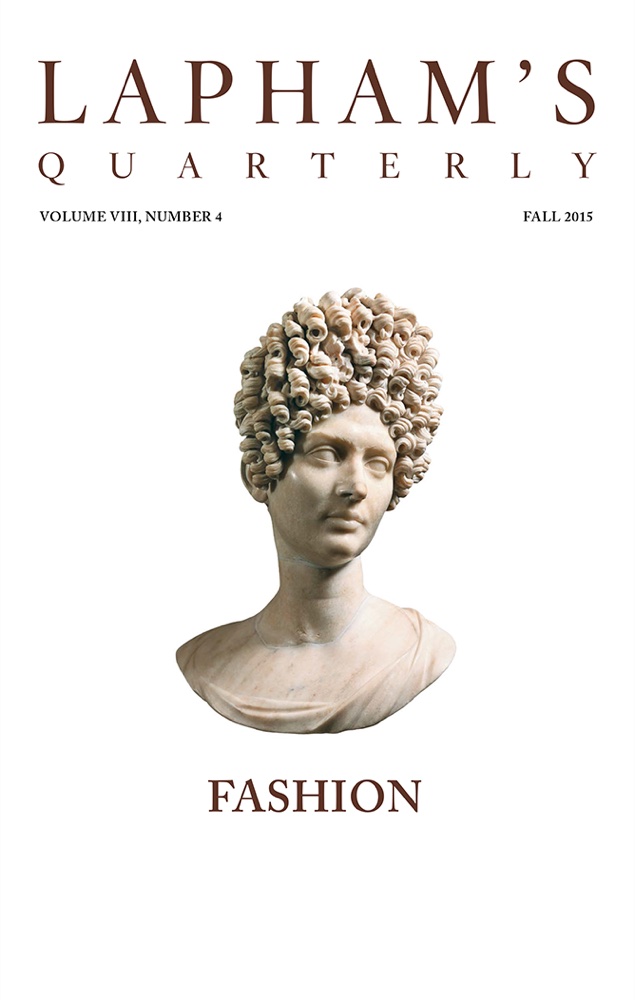
Cover of Lapham's Quarterly: Fashion

Lapham's Quarterly: Fashion

Lewis H. Lapham (ed.)

4 ideas

  1. Fashion Sells the Grasp for Absence

    Fashion functions by manufacturing desire for something that isn't actually there — the promise of transformation, status, or identity that the garment can never literally deliver. The product being placed is not the clothing but a perpetual lack that keeps the buyer reaching.

  2. Women Built and Ran Haute Couture

    In late seventeenth-century France, high fashion was created by women for women, an industry designed and controlled by female makers and consumers. This inverts the later assumption that fashion authority naturally flows from male designers to female wearers.

  3. Dress As Legible Character Judgment

    How a person covers themselves is read as direct evidence of their inner worth, competence, and social fitness — the courtier is judged by his coverings before he speaks. Clothing operates as a public text that others interpret whether or not the wearer intends it.

  4. Concealment Through Color and Material

    The visible surface of dress can be deliberately engineered to hide rather than display — as when the redcoat's scarlet is chosen to mask the blood and grime of battle. What appears to be decoration often serves a hidden functional purpose of camouflage or misdirection.

Save and mark ideas in the app