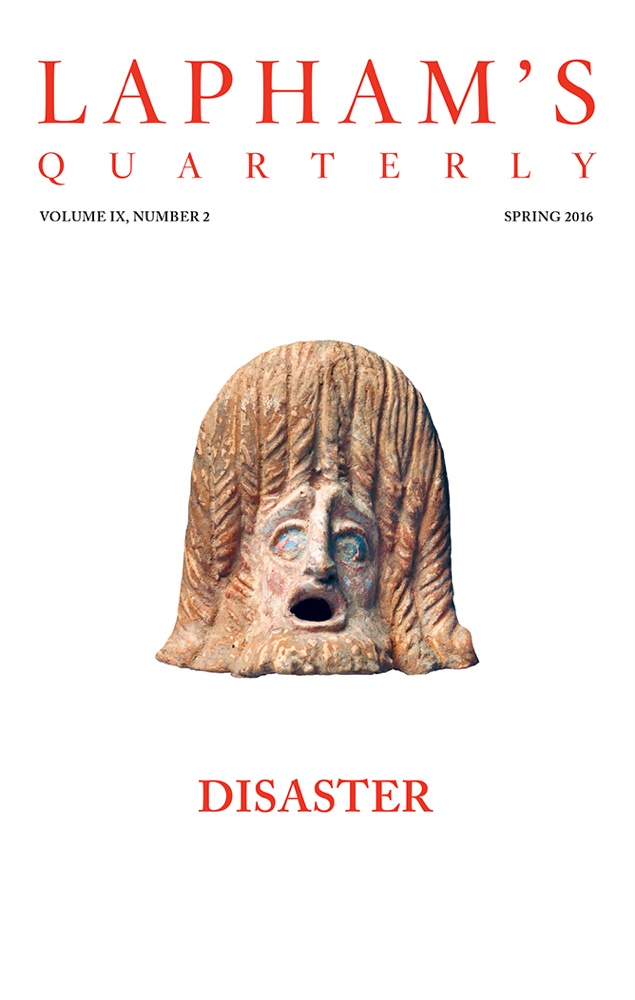
Cover of Lapham's Quarterly: Disaster

Lapham's Quarterly: Disaster

Lewis H. Lapham (ed.)

4 ideas

  1. Survivor Guilt in the Anthropocene

    When humans are simultaneously the cause and the survivors of a disaster, the emotional response shifts from grief to guilt — we mourn ecosystems we ourselves destroyed. This reframes environmental catastrophe not as something that happens to us but as something we author, making moral culpability inseparable from loss.

  2. Resource Extraction Trades Life For Wealth

    Mining and industry defenders reframe ecological devastation as a necessary cost, arguing that the metals extracted outweigh the animals killed and waters poisoned. The mechanism is a deliberate accounting move: framing destruction as a trade rather than a harm converts objection into mere annoyance and legitimizes the damage.

  3. The Law of Bursting Reservoirs

    Engineered containment systems accumulate a hidden probability of catastrophic failure proportional to the force they hold back — the larger the reservoir, the more devastating and inevitable its eventual breach. Disaster is not an anomaly but a latent property built into the structure the moment it is filled.

  4. Disaster As Perpetual Present Tense

    Rather than treating catastrophes as discrete past events, view apocalypse as a continuously recurring condition — 'the neverending end times' — that every era believes it inhabits uniquely. This lens exposes that our sense of living at the edge of collapse is not new evidence of the end but a permanent feature of human self-perception.

Save and mark ideas in the app