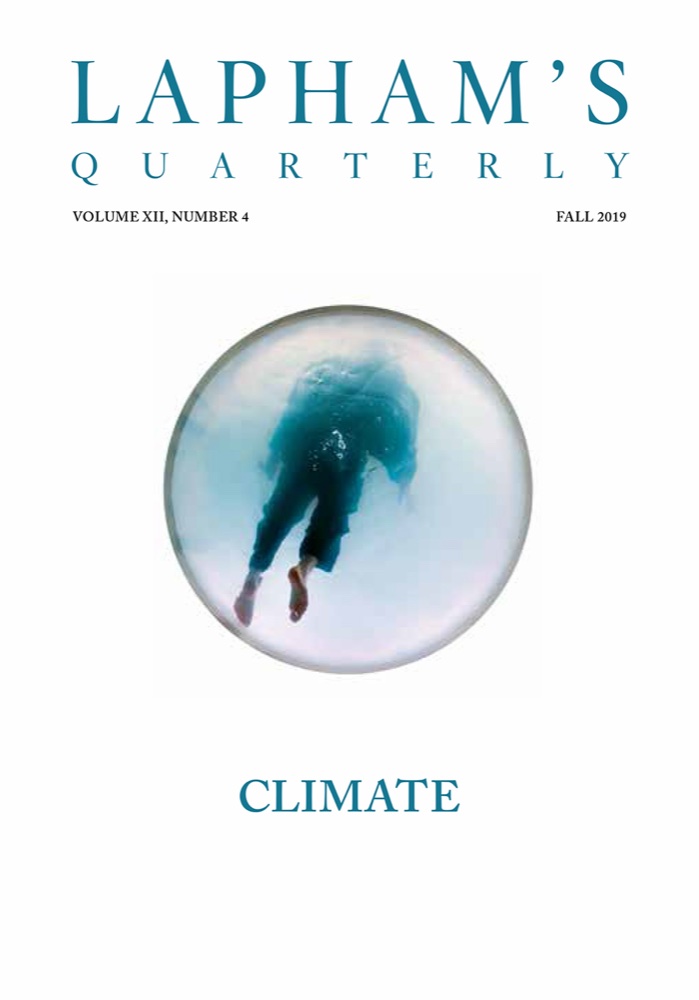
Cover of Lapham's Quarterly: Climate

Lapham's Quarterly: Climate

Lewis H. Lapham (ed.)

4 ideas

  1. Weather as the original organizing anxiety

    Across cultures and eras, human societies have structured their gods, rituals, and calendars around the unpredictability of weather, treating storms, droughts, and floods as moral verdicts rather than physical events. The persistent impulse is to read environmental catastrophe as punishment or message, which converts meteorology into theology.

  2. Climate as historical actor, not backdrop

    Rather than treating environment as the passive stage on which human events unfold, this lens treats temperature, harvest, and atmosphere as causal forces that topple empires, trigger migrations, and shape ideologies. Reading history this way relocates agency from kings and armies to growing seasons and ice years.

  3. The pastoral as denial mechanism

    Idealized depictions of nature as serene and bountiful function less as observation than as psychological insulation, allowing a society to enjoy nature aesthetically while ignoring its exploitation or degradation. The prettier the landscape rendered, the more it can mask the extraction underneath it.

  4. Catastrophe knowledge precedes catastrophe action

    Warnings about environmental ruin are typically articulated clearly and early, often centuries before the predicted collapse, yet accurate foresight does almost nothing to alter collective behavior. The bottleneck is not information but the human inability to act on losses that fall outside one's own lifespan.

Save and mark ideas in the app