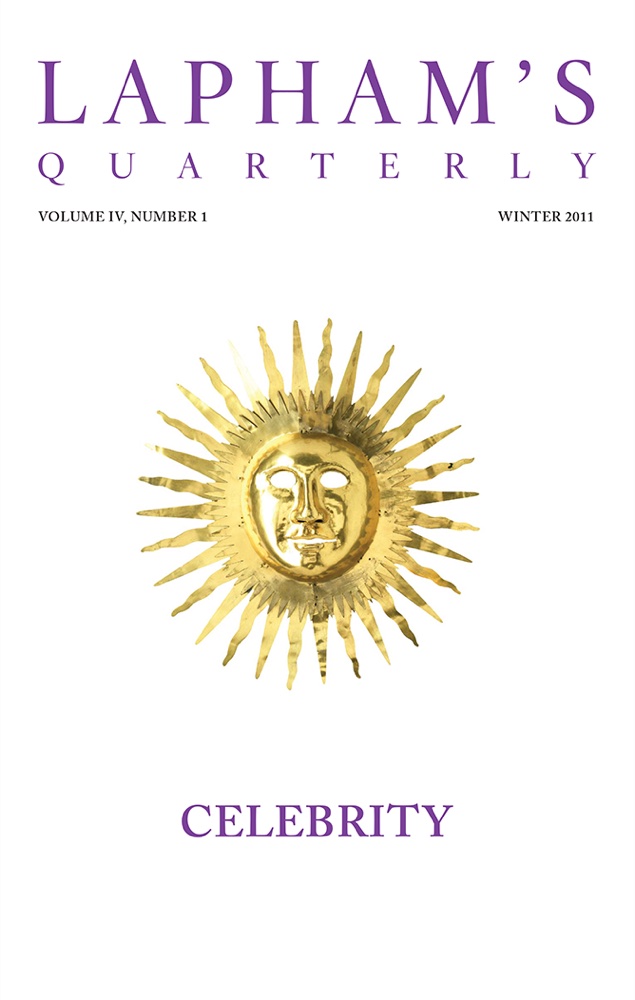
Cover of Lapham's Quarterly: Celebrity

Lapham's Quarterly: Celebrity

Lewis H. Lapham (ed.)

4 ideas

  1. Fame Detaches From Achievement

    Celebrity can be manufactured through the emotional reaction one provokes rather than through any substantive work produced. A person becomes a star by frightening, shocking, or captivating an audience, meaning the intensity of public response substitutes for merit as the engine of fame.

  2. The Narcissus Pool of Renown

    The desire for fame is a recurring human pathology — the wish to gaze at one's own magnified reflection in the admiration of others. Across eras this same vanity drives princes and commoners alike, suggesting the appetite for recognition is structural to human psychology rather than particular to any age.

  3. Posterity As Audience For Present Action

    People calibrate their behavior against an imagined future judgment — 'what will history say of me a thousand years hence?' Viewing conduct as a performance staged for distant, unborn spectators changes what actors consider worth doing and how they weigh present sacrifice against permanent reputation.

  4. Notoriety And Fame Are Interchangeable

    Public condemnation and public celebration operate through the same mechanism of mass attention, so a disgraced figure and an admired one occupy structurally identical positions of visibility. Being talked about — whether as outlaw, prisoner, or hero — is itself the currency, making the moral valence of the attention secondary to its volume.

Save and mark ideas in the app