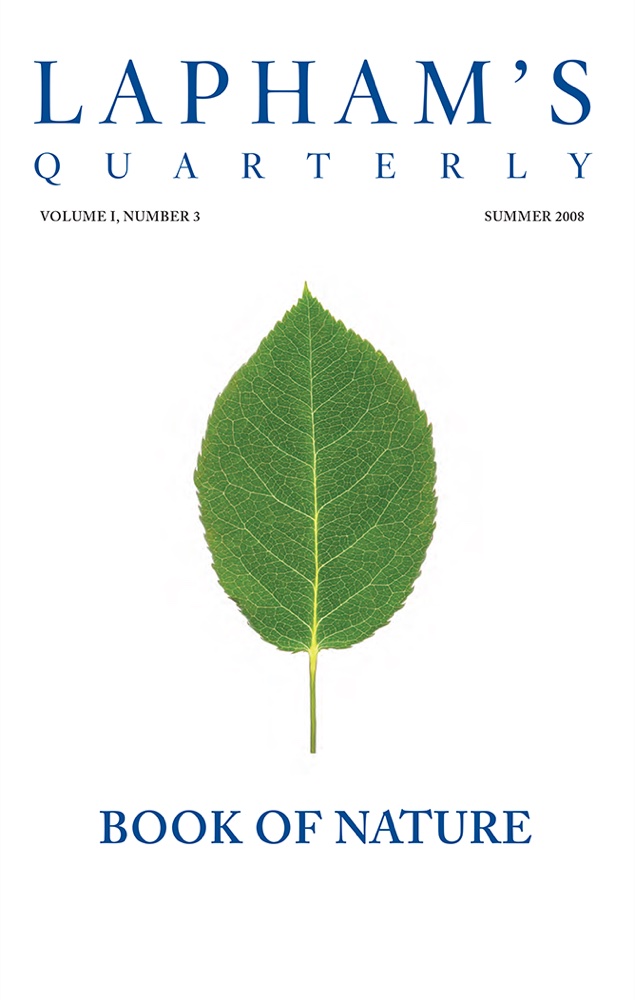
Cover of Lapham's Quarterly: Book of Nature

Lapham's Quarterly: Book of Nature

Lewis H. Lapham (ed.)

4 ideas

  1. Human Art as Nature's Continuation

    Human invention, fiction, and technology are not alien intrusions that erupt against nature, but rather the natural extension of nature's own evolutionary processes. The distinction between 'artificial' and 'natural' collapses when human creativity is understood as one more expression of the same generative forces that shaped the biological world.

  2. Nature Seen Through Imagination's Mirror

    Nature functions as the sole original artist, but its works only become meaningful when reflected and reframed through the human imagination. What we call 'the natural world' is always partly a construction of how we perceive and represent it, not a raw fact independent of the observer.

  3. Wilderness as Parent

    The wild functions not merely as a setting but as a formative caregiver — the untamed environment can raise and shape a human being in place of human society. This inverts the assumption that civilization is the necessary source of human development.

  4. Moral Standing Extends to Animals

    A person's righteousness is measured in part by their regard for the lives of the creatures under their care, making the treatment of animals an ethical test rather than a matter of indifference. Compassion toward non-human life is treated as a marker of moral character, not a sentimental extra.

Save and mark ideas in the app