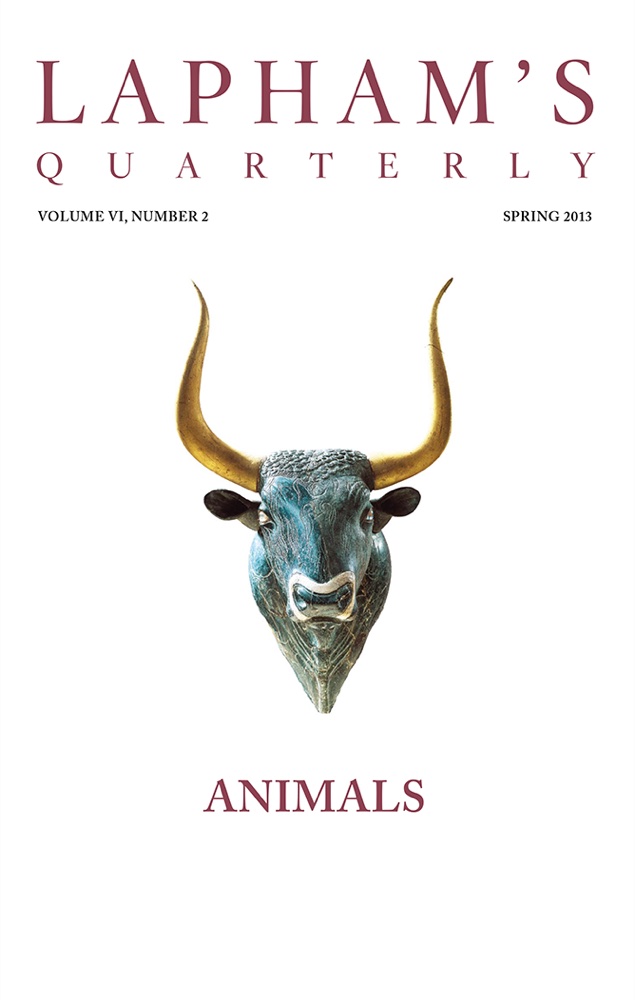
Cover of Lapham's Quarterly: Animals

Lapham's Quarterly: Animals

Lewis H. Lapham (ed.)

4 ideas

  1. Animals As Mirrors Of Human Anxiety

    How a culture depicts animals reveals less about the animals than about what that culture fears, desires, or wishes to disown in itself. The beast becomes a screen onto which humans project the appetites and instincts they refuse to claim as their own.

  2. The Boundary Between Human And Animal Is Negotiated, Not Fixed

    What counts as 'human' versus 'animal' is repeatedly redrawn across eras to serve moral, political, and economic ends, rather than tracking any stable biological fact. Defining a group as bestial has historically licensed treating them as property, prey, or sacrifice.

  3. Domestication As Mutual Transformation

    Taming an animal alters both creatures: the wolf becomes the dog, but the human life reorganizes around the herd, the hunt, or the companion. The relationship is a reciprocal reshaping of behavior and dependence, not a one-way act of control.

  4. Reading Power Through Who Eats Whom

    Hierarchies of domination can be mapped by tracing predation and consumption — who is permitted to kill, eat, hunt, or own which creatures. Status and sovereignty are enacted through the right to consume, so shifts in those rights signal shifts in the social order.

Save and mark ideas in the app