Complicity and survival under bondage
The novel refuses easy heroism, showing how the enslaved and even Dana must compromise to survive. It examines how oppression implicates everyone within its system.
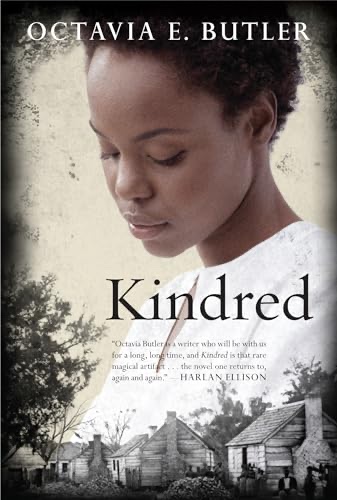
6 ideas
The novel refuses easy heroism, showing how the enslaved and even Dana must compromise to survive. It examines how oppression implicates everyone within its system.
Dana's very existence depends on a violent ancestry she would rather disown. Butler argues that African American identity is inextricably tied to the history of slavery.
Dana and her white husband Kevin, both modern people who think of themselves as free, start adjusting to plantation life with alarming speed. They play their assigned roles, accept its routines, and come to see brutality as normal. The novel argues that oppressive systems keep going because people inside them adapt, so that resistance wears down through daily accommodation rather than being crushed in a single act.
Dana is pulled from 1976 Los Angeles to antebellum Maryland whenever Rufus Weylin, the son of a white slaveholder, is in mortal danger. She is pulled back home only when her own life is threatened. She must keep Rufus alive until he fathers Hagar, her ancestor, with Alice, a free Black woman he later enslaves and repeatedly rapes, so Dana's survival depends on protecting the system that brutalizes her. The novel ends when Rufus tries to rape Dana and she kills him, returning to 1976 without the arm he was gripping.
Rufus is both Dana's ancestor and her abuser, and she cares for him, manipulates him, and fears him all at once. The relationship shows how dominance and intimacy can fuse, so that affection, dependence, and cruelty exist in the same bond. That fusion makes clean moral lines impossible for the people inside it and ties the victim to preserving the abuser.
The novel refuses to let the past stay at a safe distance: Dana is whipped, beaten, and finally loses her arm, and these injuries follow her into the present. Looking through this lens, history is something inherited that marks living bodies, not a record you read about. Knowing about an atrocity is shown to differ completely from living through its physical terms.