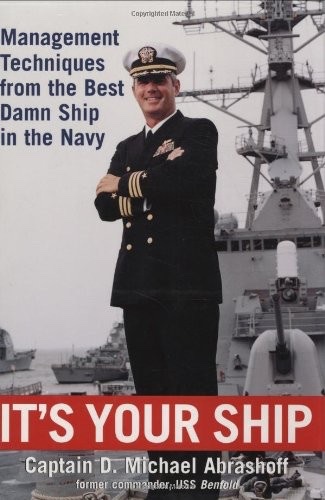
Cover of It's Your Ship

It's Your Ship

D. Michael Abrashoff

6 ideas

  1. See the Ship Through the Crew's Eyes

    When something goes wrong, the leader should ask whether the system or their own communication caused it before blaming the subordinate. Most failures trace back to unclear orders, broken processes, or a culture where people fear speaking up — not to individual incompetence.

  2. Interview Every Departing and New Person

    Personally interview each crew member to learn their goals, fears, and family situation, and conduct exit conversations to extract honest feedback the chain of command suppresses. This surfaces systemic problems early and signals that individuals matter more than their rank slot.

  3. Grassroots Cost-Cutting Authority

    The people doing the work know where money and effort are wasted, so push the authority to challenge and eliminate inefficiency down to them. Frontline operators saved millions by questioning expensive procedures that headquarters had never re-examined.

  4. Replace Rules With Purpose When Possible

    Instead of issuing detailed procedures for every situation, communicate the intended outcome and let people choose how to achieve it. Telling crew the 'why' behind an order lets them adapt intelligently when reality diverges from the script.

  5. Painting the Ship to Stop Rust

    Rusting bolts forced constant repainting, so Abrashoff authorized replacing them with stainless steel hardware paid for from the ship's own budget. The fix eliminated the recurring labor and made the ship the best-looking in the fleet, demonstrating that solving the underlying cause beats endlessly managing symptoms.

  6. Praise Loudly, Criticize Privately

    Recognition given publicly and frequently builds confidence and signals which behaviors matter, while correction delivered in private preserves dignity and keeps people willing to take risks. Treating people as if they are competent tends to make them perform competently.

Save and mark ideas in the app