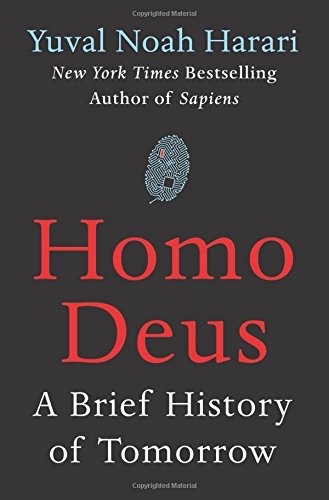
Cover of Homo Deus: A Brief History of Tomorrow

Homo Deus: A Brief History of Tomorrow

Yuval Noah Harari

6 ideas

  1. Hunger, Plague, and War Become Manageable Problems

    For most of history famine, epidemics, and violence were treated as cosmic forces beyond human control, but they have been downgraded to technical challenges with known solutions. More people now die from obesity than starvation, from old age than infectious disease, and from suicide than from soldiers, terrorists, and criminals combined.

  2. The Next Human Agenda Is Upgrading

    Having largely contained the ancient enemies of survival, humanity will redirect its enormous powers toward acquiring immortality, engineered happiness, and divine creative abilities. The project shifts from saving humans from misery to upgrading Homo sapiens into Homo deus through biotechnology and AI.

  3. Intersubjective Reality Holds Society Together

    Beyond objective things (rivers) and subjective feelings (pain) lies a third tier of reality that exists only in the shared imagination of many people: money, nations, gods, and corporations. These intersubjective entities have no physical existence yet command vast power because everyone agrees to believe in them, and they vanish the moment collective belief stops.

  4. Consciousness May Be Decoupled From Intelligence

    Throughout history high intelligence always came bundled with consciousness, but artificial intelligence breaks this link by becoming highly capable without any subjective experience. This means non-conscious algorithms could outperform humans at tasks we thought required a mind, making consciousness economically and militarily unnecessary.

  5. Dataism as the Emerging Religion

    A new worldview holds that the universe consists of data flows and that the value of any phenomenon is determined by its contribution to data processing. Under Dataism, humans are merely tools for creating an all-encompassing Internet-of-All-Things, and once that system surpasses human capabilities, people may become obsolete.

  6. Liberalism Rests on a Soon-to-Break Assumption

    Liberal politics, economics, and ethics all assume each individual has a single authentic inner voice that knows best and deserves freedom. Once biotechnology and algorithms can understand and manipulate people better than they understand themselves, authority shifts from the individual to external data systems, collapsing the foundation of free choice.

Save and mark ideas in the app