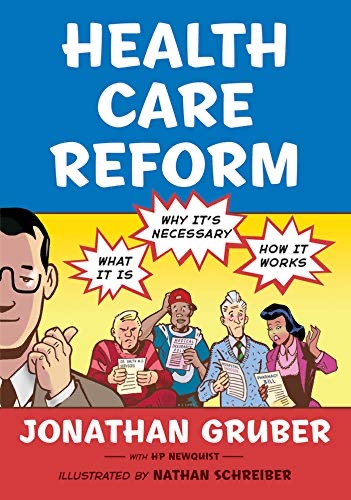
Cover of Health care reform

Health care reform

Jonathan Gruber

6 ideas

  1. The three-legged stool of reform

    Gruber explains the ACA's core logic: barring insurers from denying coverage requires an individual mandate so healthy people join the pool, which in turn requires subsidies to make coverage affordable. Remove any leg and the market collapses.

  2. Adverse selection and the death spiral

    If only the sick buy insurance, premiums rise, driving out the healthy and raising premiums further until the market fails. The book shows why guaranteed coverage cannot work without forcing broad participation.

  3. Reform built on a conservative blueprint

    Gruber traces the ACA's design to earlier market-based, individual-responsibility ideas, including the Massachusetts model he helped build. He argues it preserves private insurance rather than replacing it with government care.

  4. Community rating and pre-existing conditions

    The law requires insurers to charge similar premiums regardless of health and to cover pre-existing conditions. The comic dramatizes how this fairness goal is only financeable alongside the mandate and subsidies.

  5. Complex policy made legible through comics

    Gruber uses the graphic-novel form to make insurance-market mechanics intuitive to a lay audience. The medium is chosen to overcome the abstraction that usually dooms public understanding of health policy.

  6. Cost control remains the unfinished work

    Gruber concedes the ACA expands coverage more successfully than it bends the cost curve. He frames delivery-system reform and payment change as the harder, still-incomplete second act.

Save and mark ideas in the app